
Genesis 13 Explained - Abram and Lot Choose Their Paths
Updated: Jun 7
Introduction
Genesis 13 explained highlights a defining moment in the life of Abram (later Abraham). After returning from Egypt, Abram faces a conflict that tests his character, faith, and trust in God. This chapter reveals the contrast between walking by faith and walking by sight, as Abram and Lot go separate ways.

Summary
Genesis 13 describes Abram’s return to the land of Canaan with great wealth. Conflict arises between Abram’s herdsmen and Lot’s herdsmen due to limited resources. Abram peacefully offers Lot the first choice of land. Lot chooses the fertile Jordan Valley near Sodom, while Abram remains in Canaan. After Lot departs, God reaffirms His promise to Abram, promising him the land and countless descendants.
Key Themes
1. Faith vs. Sight Abram trusts God’s promise, while Lot chooses based on what looks best.
2. Peace and Humility Abram values peace over personal gain.
3. God’s Faithfulness God reaffirms His covenant with Abram after the separation.
4. The Danger of Worldly Attraction Lot moves toward Sodom, a place of future judgment.
5. Trusting God’s Provision Abram demonstrates confidence that God will provide.
Genesis 13 Explained: Verse-by-Verse Breakdown
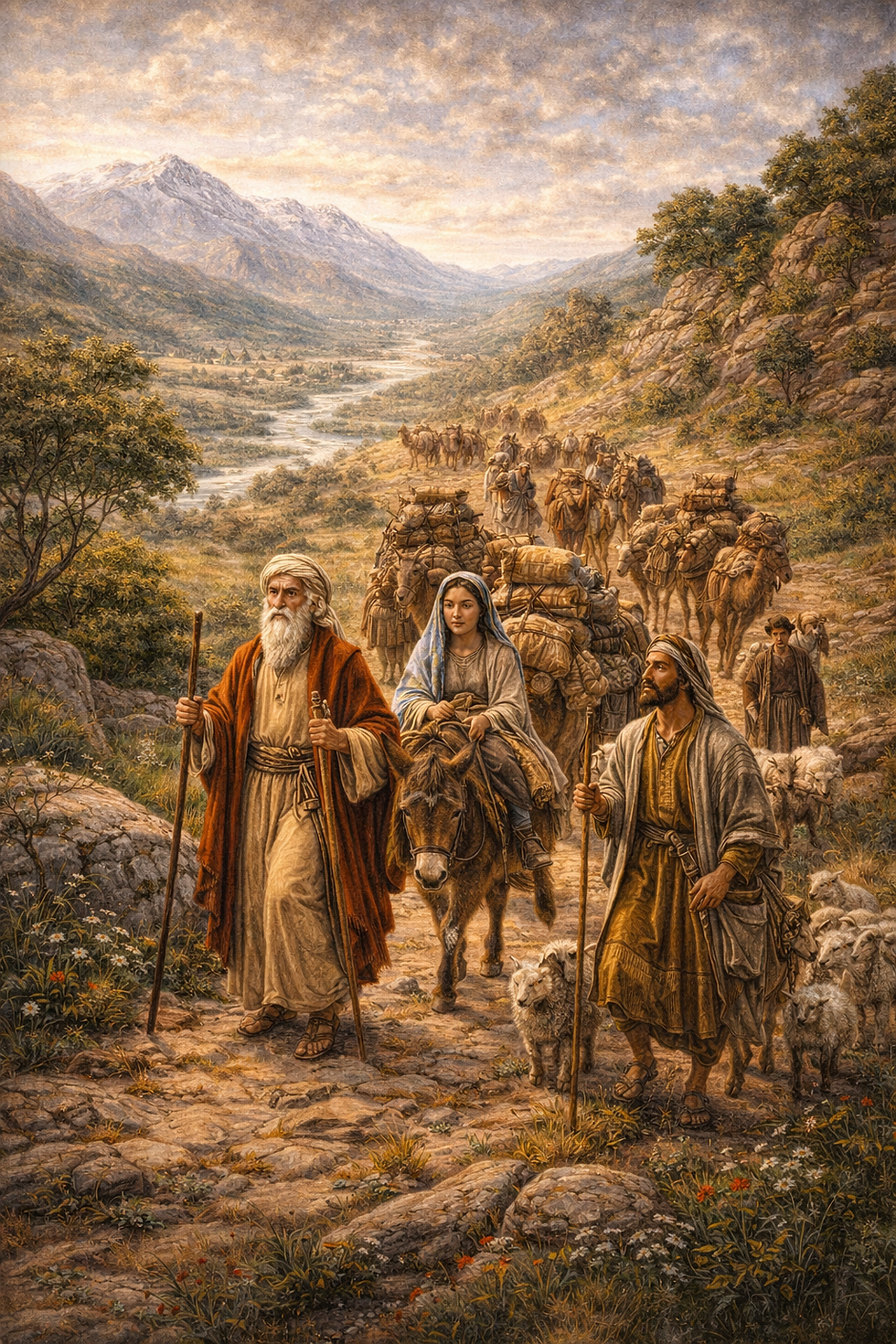
Verses 1-4 Abram returns from Egypt to Bethel, where he had previously built an altar. He calls on the name of the Lord again.
Verses 5-7 Abram and Lot both have large herds, leading to conflict between their herdsmen.
Verses 8-9 Abram proposes a peaceful solution, allowing Lot to choose whichever land he prefers.
Verses 10-13 Lot chooses the well-watered Jordan Valley, near Sodom. The area appears like the garden of the Lord, but Sodom is described as exceedingly wicked.
Verses 14-17 After Lot separates, God tells Abram to look in every direction. He promises all the land to Abram and his descendants forever.
Verse 18 Abram settles near Hebron and builds another altar to the Lord.
Deep Insight
Genesis 13 reveals a powerful contrast between two ways of living. Lot chooses based on appearance and immediate benefit. The land looks fertile and prosperous, but it places him near moral danger.
Abram, on the other hand, demonstrates faith and humility. He gives up the first choice, trusting that God’s promise is greater than any visible advantage.
This chapter also shows that God often reaffirms His promises after acts of faith. Once Abram lets Lot choose, God expands the promise, showing that obedience leads to deeper blessing.
Lot’s decision foreshadows future trouble. What begins as a simple choice of land will later draw him into the corruption of Sodom.
Tough Questions Answered
Why did Abram give Lot the first choice of land when Abram was the elder?
It was an act of faith and generosity, not weakness. As the elder and the one God had called, Abram had every right to choose first. Instead he let Lot pick, even though Lot chose the lush Jordan Valley and left Abram the harder hill country. Abram could afford to be generous because his security rested in God's promise, not in grabbing the best land. The chapter rewards that trust: right after Lot leaves, God reaffirms the entire land to Abram and his descendants. It models a kingdom principle, that those who trust God can hold possessions loosely and pursue peace, because their inheritance is guaranteed by God.
See also: Genesis 13:8-9, Genesis 13:14-17, Philippians 2:3-4
Was Lot's choice of the Jordan Valley wrong if it looked so good?
The text quietly warns that appearances deceived him. The valley looked like the garden of the Lord, well-watered and prosperous, but the very next line notes that the men of Sodom were wicked, great sinners against the Lord. Lot chose by sight and proximity to wealth, edging toward a corrupt city, and the later chapters show the cost of that drift. The passage is not condemning prosperity itself, but the habit of choosing by outward appeal while ignoring spiritual danger. It foreshadows Lot's painful entanglement with Sodom and stands as a caution to weigh decisions by more than what merely looks advantageous.
See also: Genesis 13:10-13, Genesis 19:15-26, 1 John 2:15-17
Application (Real Life)
Genesis 13 applies clearly today:
Choose faith over appearance - What looks good is not always what is right.
Value peace over profit - Relationships matter more than material gain.
Trust God’s promises - He provides beyond what we can see.
Be careful where you position yourself - Environment influences decisions.
Worship regularly - Abram continually returns to God in worship.
This chapter encourages us to make decisions based on faith, not just what seems beneficial in the moment.
Apologetics Angle
Genesis 13 highlights important truths:
God’s Covenant Faithfulness God continues to fulfill His promises regardless of circumstances.
Human Free Will Lot’s choice shows that people make real decisions with real consequences.
Foreshadowing of Christ Abram’s faith points forward to the faith that justifies believers in Christ.
The Trinity (Implied) God’s ongoing communication and promise reflect His relational nature, fully revealed later in Scripture.
Cross References
Hebrews 11:8-10 - Abram lives by faith, trusting God’s promises.
2 Corinthians 5:7 - Walk by faith, not by sight.
Psalm 37:11 - The meek will inherit the land.
Matthew 6:33 - Seek God first, and provision will follow.
Genesis 19:1-2 - Lot later lives in Sodom, showing the result of his choice.
Romans 4:3 - Abram’s faith is credited as righteousness.
Genesis 13 Explained: Conclusion
Genesis 13 shows the importance of trusting God over relying on what we see. Abram’s humility and faith lead to greater blessing, while Lot’s decision sets the stage for future trouble. This chapter reminds us that the choices we make today shape our future, and that God honors those who trust Him.
Comments