
Genesis 12 Explained - The Call of Abraham and God’s Promise
Updated: Jun 7
Introduction
Genesis 12 explained marks a major turning point in the Bible, where God calls Abram out of his homeland and begins a covenant that will impact all nations. This chapter introduces the foundation of God’s redemptive plan, showing that salvation history begins with a call to faith and obedience.

Summary
In Genesis 12, God calls Abram to leave his country, family, and father’s house to go to a land He will show him. God promises to make Abram into a great nation, bless him, make his name great, and bless all families of the earth through him. Abram obeys and travels to Canaan. Later, a famine drives him to Egypt, where he deceives Pharaoh about Sarai being his sister out of fear. Despite Abram’s failure, God protects Sarai and preserves His promise.
Key Themes
1. The Call of Faith
Abram is called to leave everything familiar without knowing the destination. Faith means trusting God before seeing the outcome.
2. God’s Global Promise
God’s plan is not limited to one man or nation. Through Abram, all nations will be blessed.
3. Obedience and Journey
Abram responds immediately. The life of faith is a journey, not a single moment.
4. Human Weakness vs God’s Faithfulness
Abram shows fear in Egypt, yet God remains faithful to His promise.
Genesis 12 Explained: Verse-by-Verse Breakdown
Verses 1-3 God commands Abram to go and gives a sevenfold promise, including blessing and global impact.
Verses 4-6 Abram obeys and travels to Canaan. God appears and promises the land to his offspring.
Verses 7-9 Abram builds altars, showing worship and dependence on God.
Verses 10-13 A famine leads Abram to Egypt. He tells Sarai to say she is his sister.
Verses 14-16 Sarai is taken into Pharaoh’s house, and Abram gains wealth.
Verses 17-20 God sends plagues on Pharaoh’s house. Pharaoh returns Sarai and sends Abram away.
Deep Insight
Genesis 12 introduces the Abrahamic covenant, which becomes central to the entire Bible. God’s promise includes land, descendants, and blessing, but most importantly, a global purpose.
The phrase “all families of the earth will be blessed” points directly to Jesus Christ. This is the gospel in seed form.
Abram’s failure in Egypt is also important. It shows that God’s plan does not depend on human perfection. God protects the promise even when His people falter.
Tough Questions Answered
What is the significance of God's promise to Abram in Genesis 12:1-3?
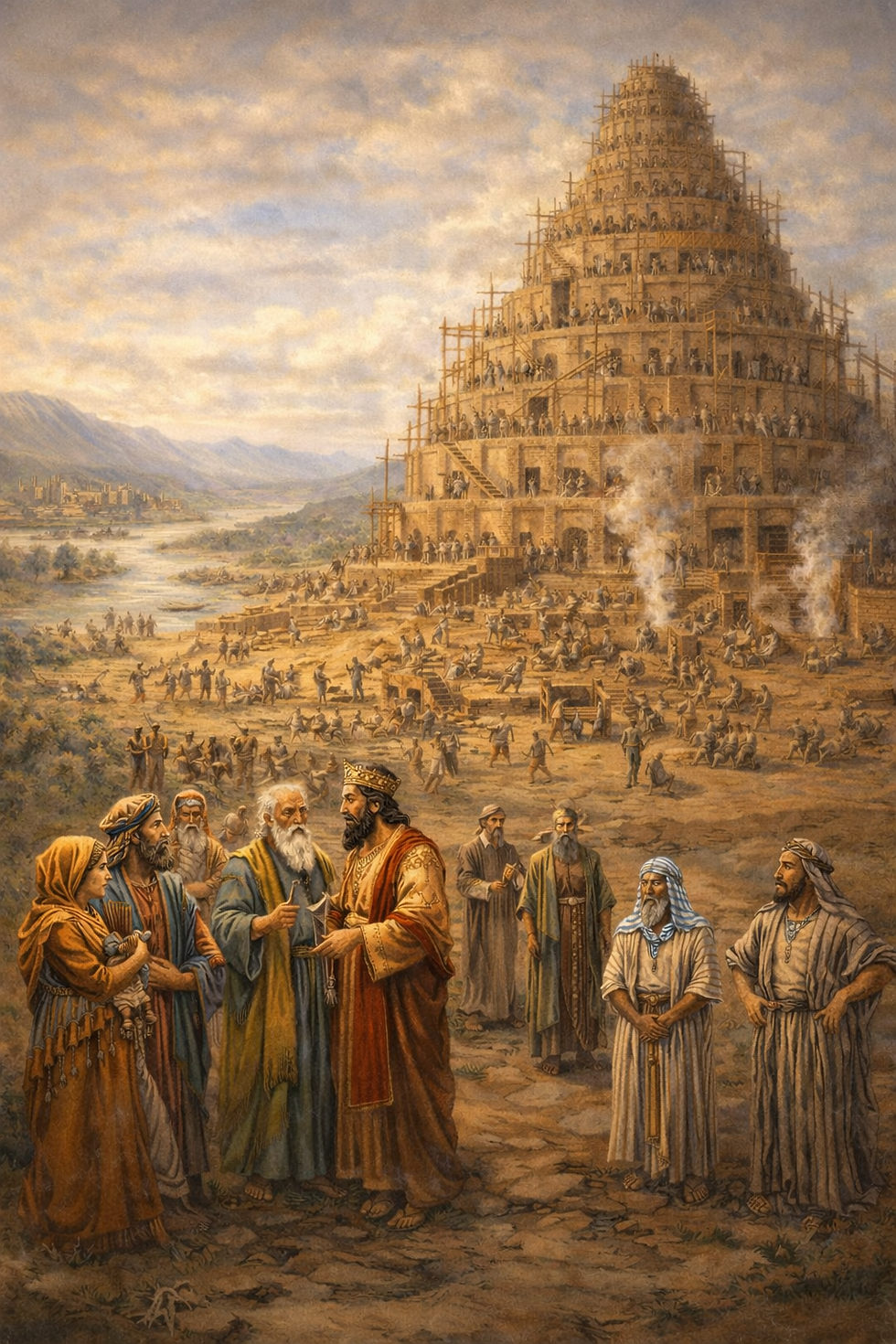
It is one of the most important promises in the entire Bible, often called the Abrahamic Covenant. God promises Abram land, descendants, a great name, and that through him all the families of the earth will be blessed. This last part is the thread that runs through all of Scripture. The blessing to the nations is fulfilled in Jesus, a descendant of Abraham, through whom salvation comes to the whole world. The promise also rests entirely on God's initiative and faithfulness, not Abram's merit. It launches God's redemptive plan to undo the scattering of Babel and gather a people from every nation.
See also: Genesis 12:1-3, Galatians 3:8, Galatians 3:16
Why did Abram lie about Sarai being his sister, and what does it teach us?
Fear drove him to it. Facing famine and traveling into Egypt, Abram worried he would be killed so someone could take his beautiful wife, so he had Sarai claim to be only his sister. It was a half-truth, since she was his half-sister, but it was meant to deceive and it endangered her and God's own promise. The lesson is honest about Abram's weakness. The man of faith faltered badly, yet God intervened, protected Sarai, and preserved the promise despite Abram's failure. It shows that the covenant rests on God's faithfulness, not on flawless human behavior, a comfort to every believer who has fallen short.
See also: Genesis 12:11-20, Proverbs 29:25, 2 Timothy 2:13
Application (Real Life)
Step out in faith even when you don’t have all the details
Trust God’s promises over your circumstances
Worship along the journey like Abram building altars
Be honest instead of fearful - fear often leads to compromise
Apologetics Angle
1. Salvation by Faith
Abram responds to God’s call by faith, not works. This becomes a core doctrine throughout Scripture.
2. Promise of Christ
The blessing to all nations is fulfilled in Jesus Christ:
Jesus is the seed through whom salvation comes to the world
This shows the unity of the Bible from Genesis to the New Testament
3. God’s Sovereignty
Even when Abram fails, God intervenes. This proves that God’s plan cannot be stopped by human weakness.
4. Trinity Insight
While not fully revealed here, the plan of redemption initiated in Genesis 12 is carried out through:
The Father who calls
The Son who fulfills the promise
The Spirit who applies salvation
Cross References
Genesis 15:6 - Abram’s faith counted as righteousness
Genesis 17:5 - Abram renamed Abraham, father of many nations
Galatians 3:8 - The gospel preached beforehand to Abraham
Romans 4:3 - Justification by faith through Abraham
Hebrews 11:8 - Abram obeyed without knowing where he was going
Acts 7:2-4 - Stephen recounts Abram’s calling
Genesis 12 Explained: Conclusion
Genesis 12 explained reveals the beginning of God’s covenant with Abraham and the unfolding of His plan to bless all nations. It shows that faith requires obedience, that God’s promises are greater than human failure, and that everything ultimately points to Christ. Abram’s journey becomes a model for all believers who are called to trust and follow God.


Comments