
Joel 2 Explained - Return to Me and the Spirit Poured Out
Updated: Nov 10
Introduction
Joel 2 Explained: judgment sounds the alarm, yet God's mercy calls people home.
Then comes the promise of His Spirit, reaching beyond rank, age, and sex.
Summary
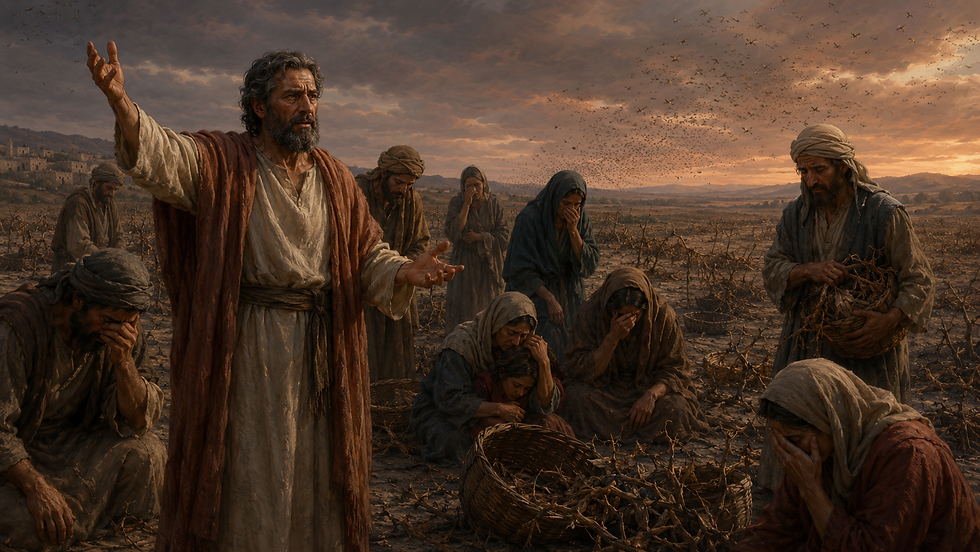
Joel sounds the alarm. The day of the Lord is coming, dark and dreadful, like an unstoppable army. But in the middle of the warning, God opens a door. He calls the people to return with their whole hearts, with fasting and weeping. He wants inward repentance, not just an outward display. God is gracious and compassionate, slow to anger, and full of loving devotion. He invites the people to gather and repent. Then the chapter turns to promise. God will restore what the locusts ate. He will pour out His Spirit on all people, sons and daughters, young and old. Everyone who calls on the name of the Lord will be saved. The apostle Peter quotes this promise at Pentecost (Acts 2:16-21).
Key Themes
The day of the Lord: A vivid warning of coming judgment described as an invading army.
Return to Me: God's central plea for genuine, heartfelt repentance.
Inward repentance: True repentance is inward, not just outward show.
God's character: Gracious, merciful, slow to anger, abounding in love.
The Spirit poured out: God's promise to fill all His people with His Spirit.

Joel 2 Explained: Verse-by-Verse Breakdown
Verses 1-11: The Army of the Lord
Blow the trumpet in Zion. The day of the Lord is coming, a day of darkness and gloom. Joel describes a vast army that runs like horses and leaps over mountains. Nothing escapes them. The earth quakes and the heavens tremble.
This is judgment portrayed with overwhelming force. Joel asks who can endure such a dreadful day (verse 11). The question hangs heavy, and then God answers it with grace.
Verses 12-14: Return With All Your Heart
God interrupts the warning with His invitation: "return to Me with all your heart, with fasting, weeping, and mourning" (verse 12). He commands, "So rend your hearts and not your garments, and return to the LORD your God" (verse 13). To rend is to tear; the repentance He seeks must reach the heart.
The reason is His character. He is gracious and compassionate, slow to anger, and full of loving devotion. He relents from sending disaster. Joel urges the people to seek Him, knowing He may turn and leave a blessing behind. The door of mercy is wide open.
Verses 15-17: Gather the People
Blow the trumpet again, but this time for a holy assembly. Gather everyone, the elders, the children, even nursing infants. Let the bride and groom leave their celebration. Let the priests weep and plead.
The prayer is simple. Spare Your people, O Lord. Do not let the nations mock and ask, where is their God? Repentance becomes a whole community turning back together.
Verses 18-32: Restoration and the Spirit
God responds with compassion. He promises grain, wine, and oil. He will restore the years the locusts have eaten. The land will rejoice and the people will praise the name of the Lord their God.
Then comes the promise: "And afterward, I will pour out My Spirit on all people" (verse 28). Sons and daughters will prophesy; old men will dream dreams and young men will see visions. Joel adds, "And everyone who calls on the name of the LORD will be saved" (verse 32). Peter identifies this promise with the Spirit coming at Pentecost (Acts 2:16-21).
Deep Insight
Genesis 37:34 describes Jacob tearing his clothes while mourning his son. That gesture makes grief visible. Joel calls for a grief over sin that reaches deeper than what others can see. The heart must turn toward God.
Joel 2:13 gives one of the clearest descriptions of God's character in the Bible. Gracious, merciful, slow to anger, abounding in love. This is the God who judges, but who longs far more to forgive.
God names sons and daughters, old and young, and even male and female servants among those receiving His Spirit (verses 28-29). Social rank does not control His gift.
Tough Questions Answered
What does it mean to rend your hearts and not your garments?
An outward display can express real sorrow, so why does God ask for more? He wants repentance itself, not merely a performance of it. Tearing clothes cannot replace turning from sin toward Him. Outward religion without inward change is empty.
Psalm 51:17 - A broken and contrite heart God will not despise.
How do we know Joel 2 points to Pentecost?
It can seem as though Christians are forcing a later event into Joel's words. The connection is explicit in Acts 2:16-21: the apostle Peter names Joel and quotes the prophecy to explain the Spirit's coming. Pentecost marks the beginning of this outpouring.
Acts 2:16-21 - Peter quotes Joel at Pentecost.
Application (Real Life)
Repentance is about the heart, not appearances. Get real with God.
Remember God's character when you fear His judgment. He is rich in mercy.
Respond while God calls you to return. His invitation in verse 12 is a reason to repent now, not to put it off.
Call on the Lord in faith, not merely with words. Romans 10:9-13 connects calling on Him with believing in the risen Jesus.
Simple closing test: When you repent, are you tearing your garments for show, or rending your heart in truth?
Apologetics Angle
A common charge is that the Old Testament offers only a harsh God, while the gospel introduces a merciful one. Joel 2 already holds judgment and mercy together. The Lord warns of a dreadful day, yet calls His people back because He is gracious and compassionate (verses 11-13). Mercy is not a late correction to His character.
Exodus 34:6 likewise describes Him as compassionate and gracious. Joel calls people to return to that same Lord, not to earn a different God's favor. His patience makes repentance possible; it does not make sin harmless. The chapter's warning and invitation come from the same faithful God.
Cross References
Acts 2:16-21 - Peter quotes Joel 2 at Pentecost as fulfilled.
Psalm 51:17 - God desires a broken and contrite heart.
Romans 10:13 - Everyone who calls on the name of the Lord will be saved.
Exodus 34:6 - The Lord is compassionate and gracious, slow to anger; Joel 2:13 describes His character in the same terms.
Genesis 37:34 - Jacob tears his clothes in grief, a visible expression that helps explain Joel's call for repentance deeper than appearance.
Joel 2 Explained: Conclusion
Joel 2 Explained is a chapter that holds judgment and mercy in the same hand. The day of the Lord is terrifying, but the heart of God is tender.
Return to Me. That is the invitation at the center of the Bible. Not earn your way back, but simply turn and come home.
And the promise of the Spirit poured out is the gospel in advance. Through Jesus, that Spirit now lives in everyone who calls on His name. Joel 2 is where the road to Pentecost begins, and where the door to God still stands wide open today. Jesus gave Himself for sinners and rose again; the mercy offered here rests on Him. Set Joel's promise beside Peter's explanation in Acts 2 and test whether repentance and trust in Christ are the response you need.

Comments