
Genesis 8 Explained - God Remembers and Restores
Updated: Jun 7
Introduction
Genesis 8 explained marks a turning point in the flood narrative. After the judgment of Genesis 7, this chapter shifts toward restoration and hope. It reveals that God does not forget His people. Even in the midst of destruction, He remains faithful and begins the process of renewal.

Summary
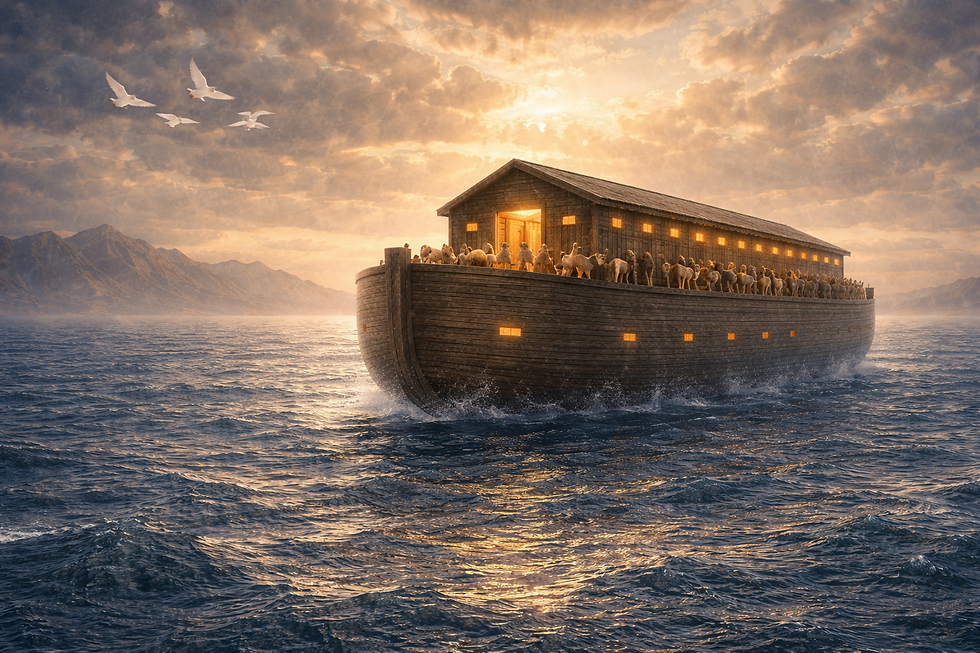
Genesis 8 describes how God causes the floodwaters to recede. The ark comes to rest on the mountains of Ararat, and Noah gradually confirms that the earth is drying. After leaving the ark, Noah builds an altar and offers sacrifices to God. In response, God promises never again to destroy the earth in the same way, establishing a pattern of stability in creation.
Key Themes
1. God’s Faithfulness- God "remembers" Noah, meaning He acts on His promise to preserve him.
2. Restoration After Judgment- The floodwaters recede, and life begins again.
3. Patience and Waiting- Noah waits for God’s timing before leaving the ark.
4. Worship After Deliverance- Noah responds with sacrifice and gratitude.
5. God’s Mercy Toward Humanity- God promises stability despite human sinfulness.
Genesis 8 Explained: Verse-by-Verse Breakdown
Verse 1 God remembers Noah and sends a wind over the earth, causing the waters to recede.
Verses 2-3 The fountains of the deep and the rain stop. The waters begin to decrease steadily.
Verse 4 The ark comes to rest on the mountains of Ararat.
Verses 5-7 As waters continue to recede, Noah sends out a raven, which does not return in a meaningful way.
Verses 8-12 Noah sends out a dove three times:
First time: it returns, finding no place to land
Second time: it returns with an olive leaf
Third time: it does not return, signaling dry land
Verses 13-14 The earth becomes fully dry.
Verses 15-19 God commands Noah to leave the ark with his family and the animals.
Verses 20-21 Noah builds an altar and offers burnt offerings. God is pleased and responds with mercy.
Verse 22 God promises that the natural order - seasons, day and night - will continue.
Deep Insight
The phrase "God remembered Noah" is powerful. It does not mean God forgot, but that He is now acting in faithfulness to His covenant. This is a key biblical pattern - God remembers and moves.
The wind sent over the earth echoes Genesis 1, where the Spirit of God moved over the waters. This suggests a kind of "new creation" after the flood.
The dove and olive leaf symbolize peace and restoration. Life is returning, and judgment is ending.
Noah’s first action after leaving the ark is worship. This shows the proper response to God’s salvation - gratitude and sacrifice.
God’s promise in verse 22 is remarkable. Even though human nature is still sinful, God commits to sustaining the world. This reveals His grace and patience.
Tough Questions Answered
Why does Genesis 8 say God "remembered" Noah, as if He had forgotten him?
The word remembered here does not mean God had lost track of Noah. In Hebrew, for God to remember someone is to act on their behalf in keeping with His commitment to them. It marks the turning point of the story, the moment the waters begin to recede and rescue starts. The same language appears when God remembers His covenant with Israel in Egypt and when He remembers Hannah's prayer. It is covenant language, not a lapse of memory. The chapter is showing that God's faithfulness, not chance, brought the flood to an end and preserved the family He had set apart.
See also: Genesis 8:1, Exodus 2:24, 1 Samuel 1:19
Why did Noah's first act off the ark be a sacrifice, and why was God pleased by it?
Before building a home or planting a field, Noah built an altar and worshiped. It shows that his rescue produced gratitude and reverence, not just relief. God's response, that He was pleased with the offering and would not again curse the ground in the same way, reveals how He receives true worship. The sacrifice also points forward. A clean animal died in the place of those God spared, foreshadowing the substitution at the heart of the gospel, where Christ is the offering that turns away judgment and secures the promise. Noah's altar sets a pattern: salvation rightly leads to worship.
See also: Genesis 8:20-21, Hebrews 11:7, Ephesians 5:2
Application (Real Life)
Genesis 8 offers strong encouragement:
God has not forgotten you - Even in difficult seasons, He is working.
Seasons change - Hard times do not last forever.
Wait on God’s timing - Noah did not rush ahead of God.
Respond with gratitude - Worship should follow deliverance.
God is merciful - He continues to provide despite human weakness.
This chapter reminds us that after judgment or hardship, restoration is possible.
Apologetics Angle
Genesis 8 highlights important truths:
God’s Covenant Faithfulness- God keeps His promises, reinforcing trust in His word.
Grace Despite Sin- Even knowing humanity’s sinful nature, God shows mercy.
Foreshadowing of Christ- Noah’s deliverance points to salvation through Christ, who brings ultimate restoration.
Cross References
Genesis 1:2 - The Spirit moves over the waters, similar to the wind in Genesis 8.
Isaiah 54:9-10 - God compares His covenant to the days of Noah.
Psalm 104:29-30 - God renews the face of the earth.
Hebrews 11:7 - Noah’s faith leads to righteousness.
2 Corinthians 5:17 - In Christ, there is new creation.
Lamentations 3:22-23 - God’s mercies are new every morning.
Genesis 8 Explained: Conclusion
Genesis 8 is a chapter of hope and renewal. It shows that God’s judgment is not the end of the story. He remembers, restores, and renews. Noah’s obedience and worship demonstrate how we should respond to God’s faithfulness. Ultimately, this chapter points forward to the greater restoration found in Christ.


Comments