
Genesis 6 Explained - The Flood, Judgment, and Noah
Updated: Jun 7
Introduction
Genesis 6 explained reveals a turning point in human history. As sin spreads across the earth, humanity becomes deeply corrupt, leading to God’s decision to judge the world through a flood. Yet even in judgment, we see God’s grace through one man - Noah.
Summary
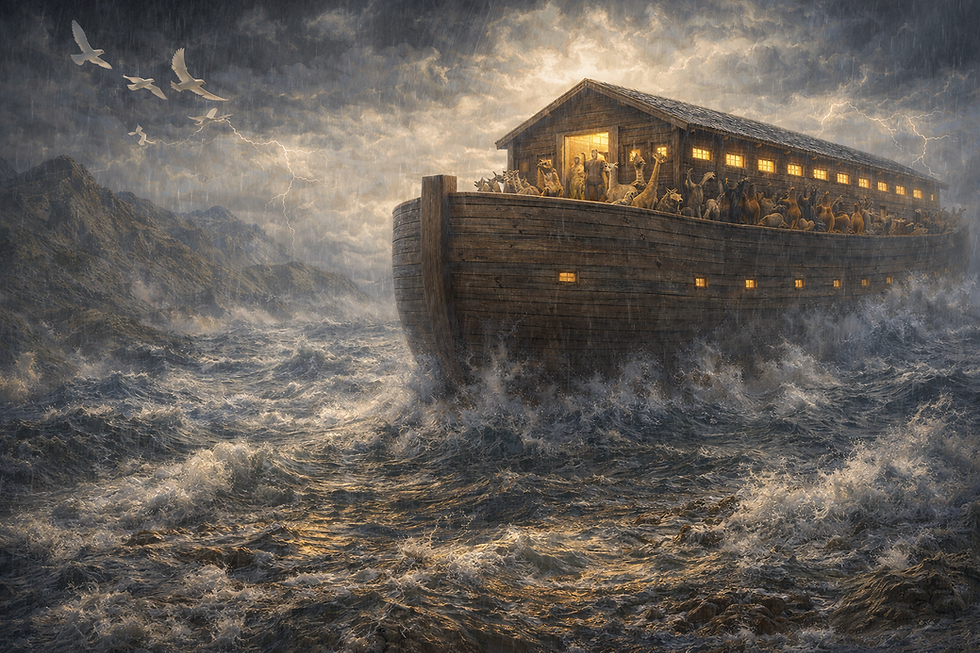
Genesis 6 describes the increasing wickedness of humanity and the mysterious account of the "sons of God" and "daughters of men." Violence and corruption fill the earth, grieving God’s heart. In response, God declares that He will destroy all living things. However, Noah finds favor with God. He is chosen to build an ark to preserve his family and representatives of all living creatures.
Key Themes
1. The Depth of Human Sin- Wickedness becomes widespread, affecting every part of society.
2. God’s Grief and Justice- God is deeply grieved by sin, yet He responds with righteous judgment.
3. Divine Grace- Noah finds favor with God despite the corruption around him.
4. Obedience and Faith- Noah obeys God’s instructions, even when they seem extraordinary.
5. Judgment and Salvation Together- The flood represents both destruction and deliverance.
Genesis 6 Explained: Verse-by-Verse Breakdown
Verses 1-4 The "sons of God" and "daughters of men" are introduced, along with the Nephilim. Interpretations vary, but the passage emphasizes increasing corruption.
Verses 5-7 God sees that human wickedness is great and that every thought is continually evil. He grieves and decides to judge humanity.
Verse 8 "Noah found favor in the eyes of the Lord." This marks a shift from judgment to hope.
Verses 9-10 Noah is described as righteous and blameless in his generation. He walks with God and has three sons: Shem, Ham, and Japheth.
Verses 11-13 The earth is filled with violence and corruption. God announces His plan to destroy all flesh.
Verses 14-16 God gives Noah detailed instructions for building the ark, including its size and design.
Verses 17-20 God declares the coming flood and instructs Noah to bring animals into the ark to preserve life.
Verses 21-22 Noah is told to gather food and prepare. He obeys everything God commands.
Deep Insight
Genesis 6 shows that sin is not just individual - it can permeate entire cultures. The phrase "every intention... only evil continually" highlights the depth of human corruption.
God’s grief reveals His relational nature. He is not indifferent to sin; it deeply affects Him. This shows both His holiness and His love.
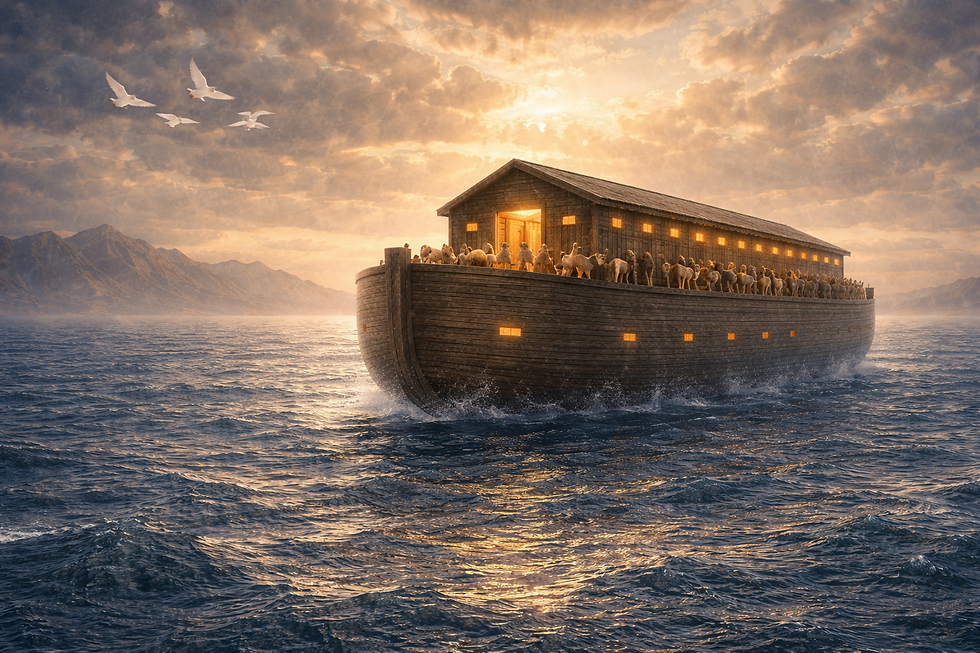
The story of Noah introduces the concept of salvation through judgment. The ark becomes a symbol of rescue. Those inside are saved, while those outside face destruction.
Noah’s righteousness does not mean perfection. It reflects faith and obedience in a corrupt world. His life demonstrates that it is possible to remain faithful even when society turns away from God.
Tough Questions Answered
Who were the "sons of God" and the Nephilim in Genesis 6:1-4?
This is one of the most debated passages in Genesis, and three main views exist. The first holds that the "sons of God" were fallen angels who took human wives, producing the Nephilim, a view supported by how that phrase is used elsewhere (Job 1:6) and by later texts (Jude 6, 2 Peter 2:4) that speak of angels who sinned. The second view holds they were the godly line of Seth intermarrying with the ungodly line of Cain, blurring the separation between the faithful and the corrupt. The third sees them as powerful human rulers or tyrants. Scripture does not settle it beyond dispute. What is clear is the point of the passage: corruption had become total, the boundaries God set were being violated, and the result was a world so wicked it grieved Him. The Nephilim were the "mighty men" of that age, not a separate species to fixate on, but a sign of how far things had fallen.
See also: Job 1:6, Jude 6, 2 Peter 2:4-5, Numbers 13:33
Was the flood global or local, and is that scientifically believable?
The text reads as a global event. It says the waters covered all the high mountains under the whole heaven and that every living thing on dry land died (Genesis 7:19-23), language that is hard to reduce to a regional flood. Jesus and the apostles treated it as a real, sweeping judgment (Matthew 24:38-39, 2 Peter 3:6). On believability, a worldwide flood is not something laboratory science can repeat, but flood traditions appear in cultures across the globe, and the geologic record shows massive water-laid sediment layers that many take as consistent with a catastrophic flood. The deeper issue is not whether unaided nature could produce it, but whether God could act in judgment within His creation. If God exists and made the world, a flood is well within His reach. The chapter frames it not as a freak weather event but as the deliberate act of a holy God responding to total corruption.
See also: Genesis 7:19-23, Matthew 24:38-39, 2 Peter 3:6, Hebrews 11:7
Application (Real Life)
Genesis 6 speaks powerfully today:
Sin has serious consequences - It affects individuals and entire societies.
God sees everything - Nothing escapes His notice.
Grace is available - Even in judgment, God provides a way of salvation.
Stand firm in your faith - Like Noah, you can walk with God in a corrupt world.
Obedience matters - Faith is shown through action.
This chapter challenges us to live differently, even when culture moves in the opposite direction.
Apologetics Angle
Genesis 6 addresses important theological truths:
The Justice of God- God’s judgment is not random but a response to extreme corruption.
The Mercy of God- Noah’s salvation shows that God always provides a way out.
Foreshadowing of Christ- The ark points to Jesus as the means of salvation. Just as Noah was saved through the ark, believers are saved through Christ.
The Trinity (Implied)- God’s involvement in judgment and salvation reflects His complex nature, later revealed fully in Father, Son, and Spirit.
Cross References
Matthew 24:37-39 - Jesus compares the days of Noah to the end times.
Hebrews 11:7 - Noah builds the ark by faith.
2 Peter 2:5 - Noah is called a preacher of righteousness.
1 Peter 3:20-21 - The flood symbolizes salvation through water.
Romans 1:21-23 - Humanity’s descent into corruption.
John 3:16 - God provides salvation out of love.
Genesis 6 Explained: Conclusion
Genesis 6 shows the seriousness of sin and the reality of God’s judgment, but it also highlights His grace. While the world becomes completely corrupt, one man finds favor with God. Noah’s story reminds us that even in the darkest times, God provides a way of salvation for those who trust and obey Him.
Comments