
Genesis 49 Explained - Jacob’s Prophecy Over the Twelve Tribes
Updated: Jun 7
Introduction
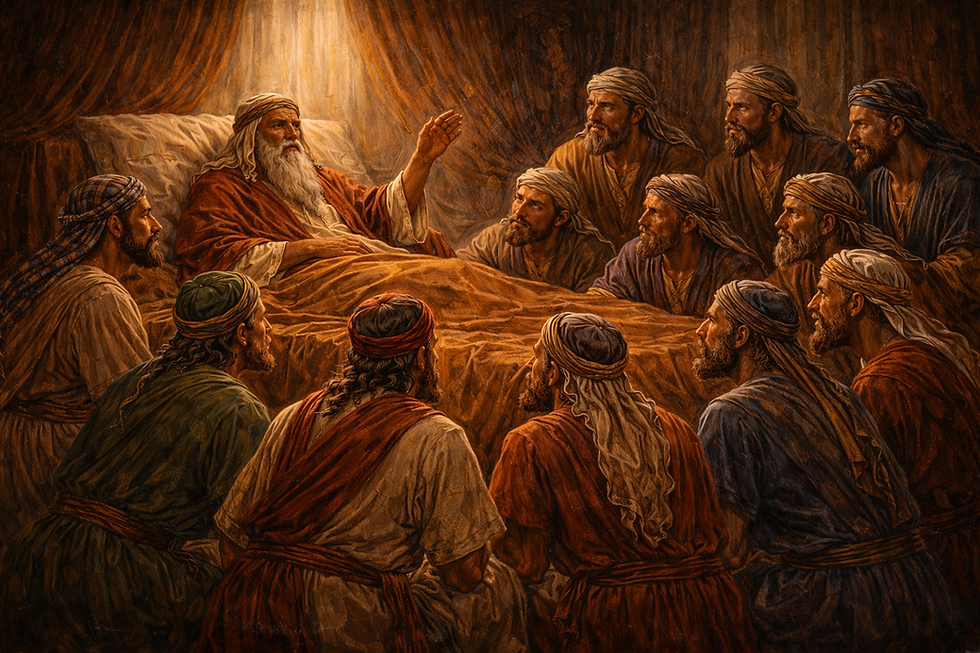
Genesis 49 explained records Jacob’s final words to his sons, where he speaks prophetic blessings and declarations over each of them. This chapter is not just about family, it is about the future of the twelve tribes of Israel and God’s unfolding plan.
Summary
Genesis 49 tells how Jacob gathers his sons and speaks over each one, revealing their character and future. Some receive rebukes, others blessings, but all are given prophetic insight. The most significant prophecy is given to Judah, pointing to kingship and ultimately the coming Messiah. The chapter ends with Jacob’s death and his request to be buried in the promised land.
Key Themes
1. Prophecy and Future Fulfillment
Jacob’s words are not random blessings, they are prophetic declarations about the tribes of Israel.
2. Character Matters
Each son’s future reflects his past actions, showing that character has lasting consequences.
3. The Rise of Judah
Judah receives the promise of leadership and kingship, setting the stage for David and Jesus.
4. God’s Sovereign Plan
Even through flawed individuals, God’s purpose moves forward.
Genesis 49 Explained: Verse-by-Verse Breakdown
Verses 1-2 - Gathering the Sons
Jacob calls his sons together to tell them what will happen “in the days to come,” signaling prophetic insight.
Verses 3-4 - Reuben
Reuben, the firstborn, loses his position because of instability and past sin. His potential is diminished.
Verses 5-7 - Simeon and Levi
These brothers are rebuked for their violence. Their tribes will be scattered in Israel.
Verses 8-12 - Judah
Judah receives the greatest blessing:
Leadership among his brothers
The “scepter” will not depart from him
A prophecy pointing to a future ruler
This clearly points forward to the Messiah, Jesus Christ.
Verses 13-21 - Zebulun to Dan
Each son receives a specific prophecy:
Zebulun - dwelling by the sea
Issachar - strength but servitude
Dan - justice and cunning
Naphtali - freedom and fruitfulness
Verses 22-26 - Joseph
Joseph receives a rich blessing of fruitfulness, strength, and divine favor. His suffering did not prevent his blessing.
Verses 27 - Benjamin
Benjamin is described as fierce and strong, reflecting future tribal characteristics.
Verses 28 - Summary
All twelve tribes receive their blessing according to their identity and future role.
Verses 29-33 - Jacob’s Death
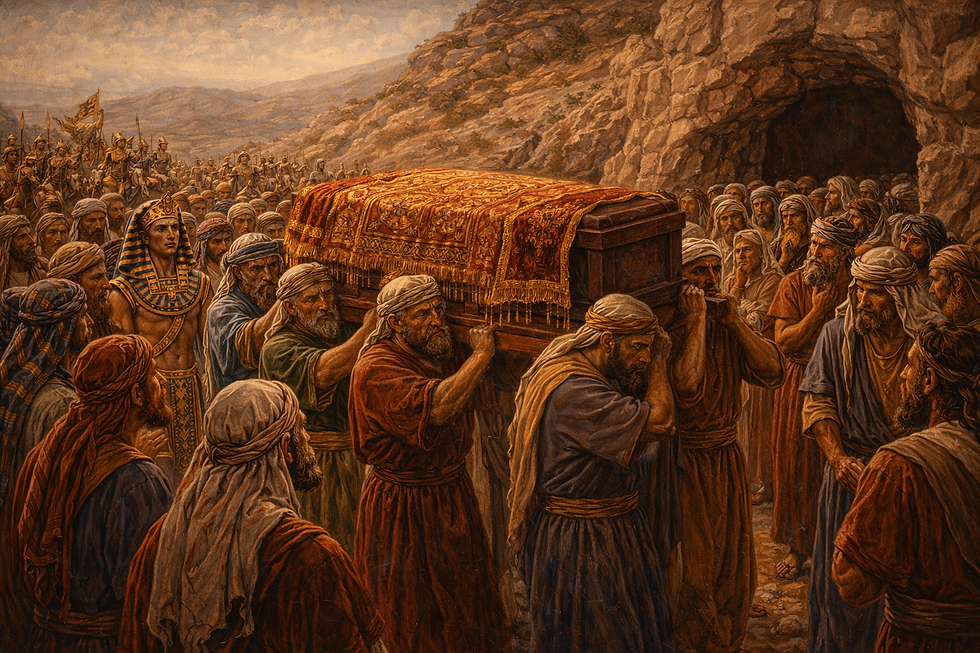
Jacob instructs his sons to bury him in Canaan, reaffirming his faith in God’s promise. He then dies peacefully.
Deep Insight
Genesis 49 is one of the most prophetic chapters in Genesis.
The blessing of Judah stands at the center:
“The scepter shall not depart from Judah…”
This points directly to:
King David
The royal line of Israel
Ultimately Jesus Christ
This is a major Messianic prophecy.
The chapter also shows that:
God uses imperfect people
Past actions influence future outcomes
God’s plan is bigger than human failure
Jacob’s words shape the identity of the entire nation of Israel.
Tough Questions Answered
What is the meaning of Jacob's prophecy that the scepter will not depart from Judah?
It is one of the great messianic prophecies of the Old Testament. Jacob declares that the scepter, a symbol of kingship, will not depart from Judah until Shiloh comes, to whom the obedience of the peoples belongs. This points forward to a coming ruler from Judah's line to whom the nations will submit. The prophecy is fulfilled in the line of David, who came from Judah, and ultimately in Jesus, called the Lion of the tribe of Judah. Given centuries before David or Christ, it shows God charting the royal, redemptive line through which the Messiah would come to reign over all peoples.
See also: Genesis 49:10, Revelation 5:5, Matthew 1:1-3
Why do some sons receive rebukes instead of blessings in Genesis 49?
Because Jacob's final words were honest prophecies tied to each son's character and future, not flattery. Reuben lost his preeminence because of his instability and past sin, and Simeon and Levi were rebuked and their tribes scattered because of their fierce, violent anger, recalling the massacre at Shechem. These were not arbitrary; they reflected real conduct and its consequences for their descendants. The chapter shows that actions have generational effects and that God's assessment is truthful, not sentimental. Yet even Levi's scattering was later redeemed into a priestly role, showing God can fold consequence into purpose. Jacob's words combine sober accountability with prophetic insight.
See also: Genesis 49:3-7, Genesis 34:25-30, Genesis 35:22
Application (Real Life)
1. Your Actions Have Lasting Impact
Reuben, Simeon, and Levi show how choices affect the future.
2. God Can Still Use Imperfect People
Judah was not perfect, yet he was chosen for greatness.
3. Speak Life and Truth
Jacob’s words carried weight. Our words also matter.
4. Trust God’s Bigger Plan
Even when life seems messy, God is working toward a greater purpose.
Apologetics Angle
Genesis 49 strongly supports biblical truth:
Messianic prophecy - The promise of a ruler from Judah points to Jesus
Consistency of Scripture - The line of Judah is fulfilled throughout the Bible
God’s sovereignty - He directs history through generations
This chapter is a key link between Genesis and the coming of Christ.
Cross References
Genesis 37:26-27 - Judah’s earlier actions
2 Samuel 7:12-16 - God’s promise to David’s line
Psalm 110:1-2 - The reign of the Messiah
Micah 5:2 - The ruler from Bethlehem
Matthew 1:1-3 - Jesus from the line of Judah
Revelation 5:5 - Jesus as the Lion of Judah
Genesis 49 Explained: Conclusion
Genesis 49 explained reveals how God’s plan unfolds through prophecy, character, and generations. Jacob’s final words shape the future of Israel and point directly to the coming Messiah. This chapter reminds us that God’s purposes are intentional, powerful, and always moving toward fulfillment.


Comments