
Genesis 48 Explained - God’s Blessing and the Reversal of Expectation
Updated: Jun 7
Introduction
Genesis 48 explained captures a powerful moment near the end of Jacob’s life as he blesses Joseph’s sons. This chapter reveals God’s sovereignty, the importance of blessing, and how His ways often overturn human expectations.

Summary
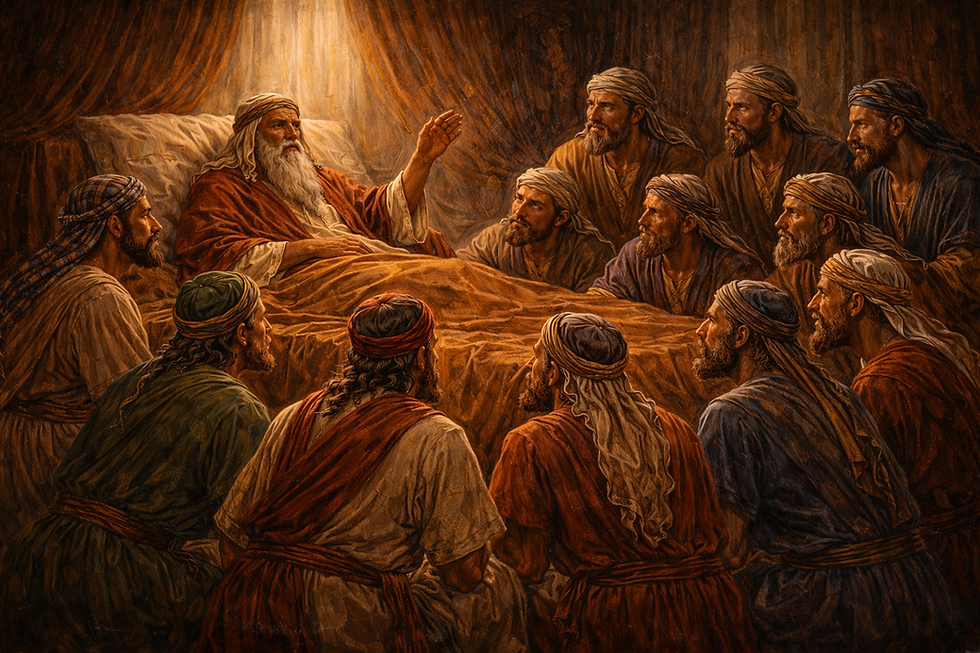
Genesis 48 tells how Joseph brings his sons, Manasseh and Ephraim, to Jacob for a blessing. Though Manasseh is the firstborn, Jacob intentionally gives the greater blessing to Ephraim, the younger. Joseph tries to correct him, but Jacob insists, recognizing God’s will. This moment establishes Ephraim’s future prominence and reflects God’s pattern of choosing according to His purpose, not human tradition.
Key Themes
1. God’s Sovereign Choice
God’s blessing does not follow human customs. He chooses according to His purpose.
2. The Reversal Pattern
The younger receiving the greater blessing continues a pattern seen throughout Genesis.
3. Faith at the End of Life
Jacob speaks with confidence about God’s promises, even as he nears death.
4. Adoption and Identity
Jacob adopts Joseph’s sons as his own, giving them equal standing among the tribes of Israel.
Genesis 48 Explained: Verse-by-Verse Breakdown
Verses 1-4 - Jacob Recalls God’s Promise
Jacob recounts how God appeared to him and promised to make him fruitful and multiply his descendants. He anchors this moment in God’s covenant.
Verses 5-7 - Adoption of Ephraim and Manasseh
Jacob declares that Joseph’s sons will be counted as his own, like Reuben and Simeon. This gives Joseph a double portion through his sons.
Verses 8-12 - The Sons Presented
Joseph brings Ephraim and Manasseh before Jacob. Despite his failing eyesight, Jacob prepares to bless them.
Verses 13-16 - The Blessing Begins
Joseph positions Manasseh (the firstborn) at Jacob’s right hand, but Jacob crosses his hands, placing his right hand on Ephraim, the younger.
Verses 17-20 - The Reversal Confirmed
Joseph tries to correct his father, but Jacob refuses. He declares that Ephraim will become greater than Manasseh.
Verses 21-22 - Final Words
Jacob expresses his faith that God will bring his descendants back to the promised land. He also gives Joseph an extra portion of inheritance.
Deep Insight
Genesis 48 highlights a consistent biblical pattern:
Abel over Cain
Isaac over Ishmael
Jacob over Esau
Ephraim over Manasseh
God’s choice is not based on human order, but divine purpose.
The crossing of Jacob’s hands is symbolic. It shows that God’s blessing often comes in unexpected ways.
This chapter also points to Christ:
Just as Ephraim receives blessing not based on status, salvation is not based on human merit
God chooses by grace, not by position
It also reflects adoption:
Believers are adopted into God’s family
Identity is given, not earned
Tough Questions Answered
Why did Jacob adopt Joseph's sons Ephraim and Manasseh as his own?
By declaring that Ephraim and Manasseh would be counted as his own sons, like Reuben and Simeon, Jacob gave Joseph a double portion of the inheritance through his two sons. This effectively granted Joseph the firstborn's double share, which the disgraced Reuben had forfeited. It is why later Israel has tribes named Ephraim and Manasseh rather than a single tribe of Joseph. The act reflects God's pattern of redistributing blessing according to His purposes rather than strict birth order, and it honors Joseph's faithfulness. It also weaves Joseph's Egyptian-born sons fully into the covenant family and the future nation of Israel.
See also: Genesis 48:5, 1 Chronicles 5:1-2, Genesis 48:16
Why did Jacob deliberately cross his hands to bless the younger son over the older?
Jacob, guided by God, placed his right hand of greater blessing on the younger Ephraim rather than the firstborn Manasseh, and when Joseph tried to correct him, Jacob refused, saying he knew what he was doing and that the younger would be greater. This continues a striking Genesis pattern of God choosing the younger over the older, seen with Isaac over Ishmael, Jacob over Esau, and now Ephraim over Manasseh. It underscores that God's blessing flows from His sovereign choice and grace, not from human custom or merit. Jacob, who once schemed for blessing, now confidently bestows it according to God's leading.
See also: Genesis 48:13-20, Romans 9:11-12, 1 Corinthians 1:27-29
Application (Real Life)
1. God’s Ways Are Not Always What We Expect
What seems backward to us may be exactly God’s plan.
2. Your Position Does Not Limit God’s Purpose
Ephraim was not firstborn, yet he received the greater blessing.
3. Finish Strong in Faith
Jacob speaks confidently about God’s promises at the end of his life.
4. Identity Comes from God
Just as Ephraim and Manasseh were adopted, our identity comes from God’s declaration.
Apologetics Angle
Genesis 48 reinforces key doctrines:
God’s sovereignty - He chooses according to His will
Grace over works - Blessing is not earned by position
Adoption - A central theme later fulfilled in the New Testament
Consistency of Scripture - The pattern of reversal appears throughout the Bible
This chapter strengthens the understanding that God’s plan is intentional and unified.
Cross References
Genesis 25:23 - The older shall serve the younger (Jacob and Esau)
Genesis 41:51-52 - Birth of Manasseh and Ephraim
Deuteronomy 21:17 - Firstborn rights explained
1 Samuel 16:7 - God looks at the heart, not outward status
Romans 9:10-13 - God’s sovereign choice explained
Ephesians 1:5 - Adoption into God’s family
Genesis 48 Explained: Conclusion
Genesis 48 explained shows that God’s blessing follows His purpose, not human expectations. Jacob’s actions reveal deep faith and understanding of God’s ways. This chapter reminds us that God’s plans are often unexpected, but always perfect.

Comments