
Genesis 47 Explained - God’s Provision in a Foreign Land
Updated: Jun 7
Introduction
Genesis 47 explained shows how God provides for Jacob’s family in Egypt during a time of severe famine. This chapter highlights Joseph’s wisdom, God’s faithfulness, and how His people are preserved even in a foreign land.
Summary
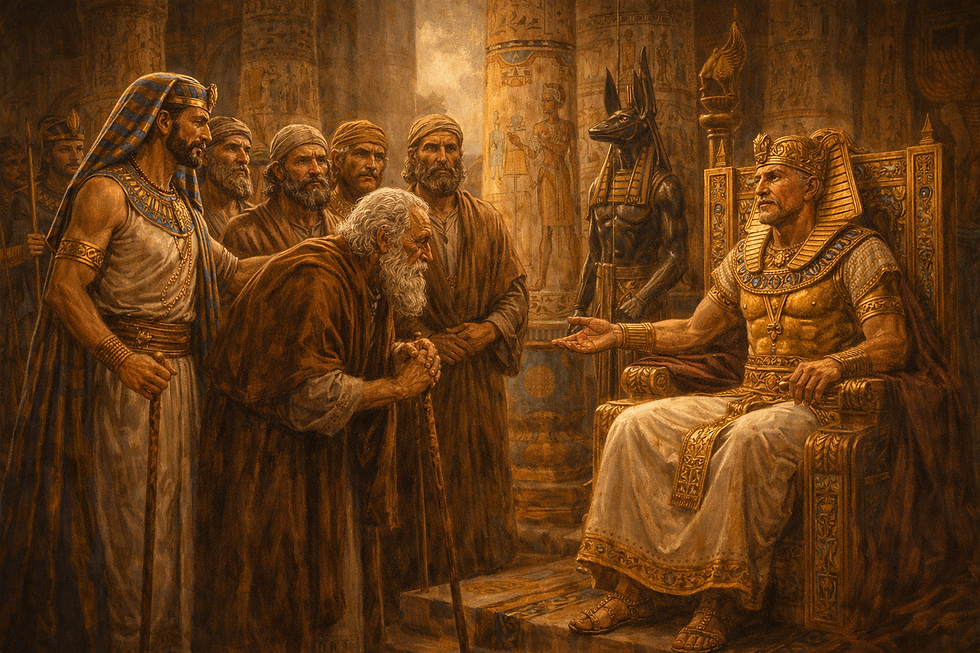
Genesis 47 tells how Joseph presents his family to Pharaoh, and they are given the land of Goshen to live in. Jacob blesses Pharaoh and settles in Egypt. Meanwhile, the famine becomes more severe, and Joseph manages Egypt’s resources wisely, ultimately bringing the land under Pharaoh’s authority. The chapter ends with Jacob nearing death and making Joseph promise to bury him in the promised land.
Key Themes
1. God’s Provision in Crisis
Even during a devastating famine, God provides for Jacob’s family through Joseph.
2. Wisdom and Leadership
Joseph manages resources wisely, ensuring survival not only for Egypt but for surrounding nations.
3. God’s People in a Foreign Land
Israel lives in Egypt but remains distinct, preserving identity and purpose.
4. Faith in God’s Promises
Jacob insists on being buried in Canaan, showing his trust in God’s covenant.
Genesis 47 Explained: Verse-by-Verse Breakdown
Verses 1-6 - Before Pharaoh
Joseph presents five of his brothers and his father Jacob to Pharaoh. They explain they are shepherds, and Pharaoh allows them to settle in Goshen, the best part of the land.
Verses 7-10 - Jacob Blesses Pharaoh
Jacob meets Pharaoh and blesses him. Even though Pharaoh is powerful, Jacob stands as a man of God and speaks blessing over him.
Verses 11-12 - Provision for the Family
Joseph settles his family in Goshen and provides food for them. God’s promise of preservation is being fulfilled.
Verses 13-19 - The Famine Intensifies
The famine becomes extremely severe. People trade money, livestock, and eventually land for food. Joseph manages this process carefully.
Verses 20-26 - Egypt Under Pharaoh
Joseph purchases the land for Pharaoh and establishes a system where the people give one-fifth of their produce to him. This creates long-term stability.
Verses 27 - Israel Multiplies
Despite the famine, the Israelites thrive in Goshen and grow in number, fulfilling God’s promise to multiply them.
Verses 28-31 - Jacob’s Final Request
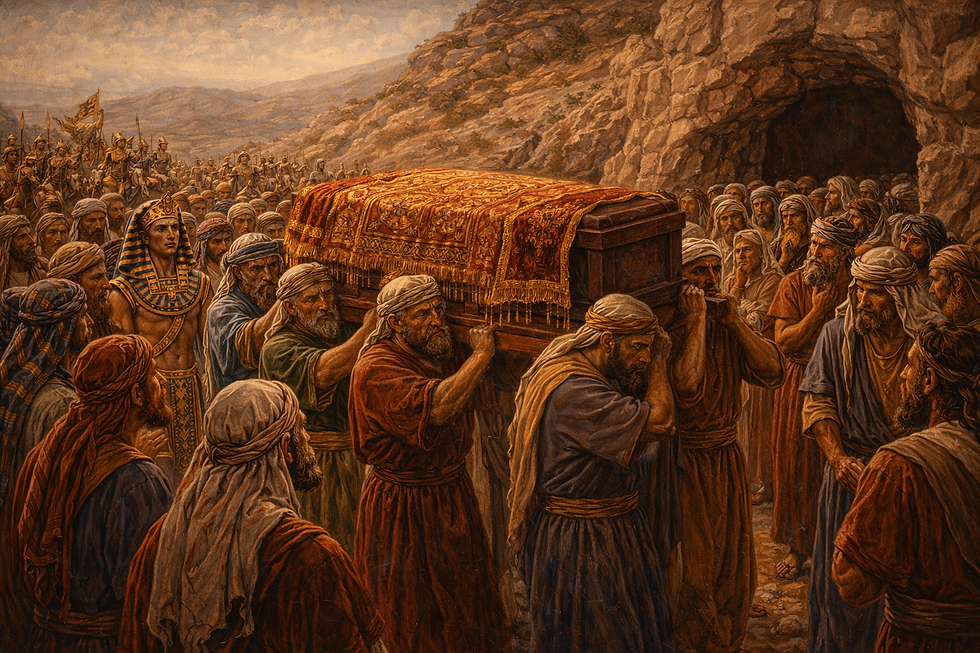
Jacob lives 17 years in Egypt. As he nears death, he makes Joseph promise to bury him in Canaan, showing his faith in God’s promise of the land.
Deep Insight
Genesis 47 reveals a powerful contrast:
Egypt gains security through Joseph’s leadership
Israel gains growth through God’s promise
Even in a foreign land, God’s people are not abandoned.
Jacob blessing Pharaoh is also significant. It shows that:
God’s people carry spiritual authority
True blessing comes from God, not earthly power
Jacob’s desire to be buried in Canaan is a statement of faith. He knows Egypt is temporary, but God’s promise is eternal.
This chapter also points to Christ:
Joseph provides physical bread that saves lives
Jesus provides spiritual bread that gives eternal life
Joseph preserves a nation, but Jesus saves the world.
Tough Questions Answered
Why did Joseph have the Egyptians sell their land and become servants of Pharaoh?
It was Joseph's administration of a severe, prolonged famine. As food ran out, the people themselves came to Joseph to trade money, livestock, and eventually land for grain, and Joseph established a system where they farmed Pharaoh's land and gave a fifth of the harvest in return. The arrangement kept the people alive through the crisis and was regarded by them with gratitude, as they said Joseph had saved their lives. It reflects the wisdom God gave Joseph to steward resources through catastrophe. The chapter shows godly stewardship preserving an entire society, while Israel was settled safely in Goshen and prospered.
See also: Genesis 47:25, Genesis 41:34-36, Proverbs 6:6-8
Why was Jacob so insistent on being buried in Canaan rather than Egypt?
Because his hope was anchored in God's promise of the land, not in the comfort and prosperity of Egypt. Though he lived his final years secure in Goshen, Jacob made Joseph swear to carry his body back to the burial site of Abraham and Isaac in Canaan. His burial request was an act of faith, a declaration that Egypt was not home and that God's covenant promise of the land still stood for his descendants. It looked beyond his own death to the future God had pledged. The same faith appears in his sons and points to the believer's hope set on God's promises beyond this life.
See also: Genesis 47:29-31, Genesis 49:29-31, Hebrews 11:21-22
Application (Real Life)
1. God Provides in Difficult Seasons
Even in famine, God makes a way.
2. You Can Thrive in Unfamiliar Places
God’s presence is not limited to where you are.
3. Wise Stewardship Matters
Joseph’s planning saved countless lives.
4. Keep Your Hope in God’s Promises
Like Jacob, we should hold onto God’s promises even when circumstances change.
Apologetics Angle
Genesis 47 supports key biblical truths:
God’s faithfulness - He preserves His people through crisis
Historical realism - Economic systems and famine management reflect real conditions
God’s sovereignty - He works through leaders like Joseph
Foreshadowing Christ - Joseph as provider points to Jesus as Savior
This chapter reinforces that God’s plan continues across generations and circumstances.
Cross References
Genesis 46:3-4 - God promises to go with Jacob into Egypt
Genesis 50:13 - Jacob is buried in Canaan as requested
Exodus 1:7 - Israel multiplies greatly in Egypt
Psalm 105:16-17 - God sent Joseph ahead during famine
John 6:35 - Jesus is the bread of life
Hebrews 11:21-22 - Jacob’s faith in God’s promises
Genesis 47 Explained: Conclusion
Genesis 47 explained shows that God provides, preserves, and fulfills His promises even in difficult and unfamiliar circumstances. Joseph’s leadership and Jacob’s faith demonstrate that God’s plan is always moving forward, no matter where His people are. This chapter reminds us to trust God’s provision and remain anchored in His promises.


Comments