
Exodus 8 Explained - Frogs, Gnats, Flies, and a Bargaining Pharaoh
Introduction
Exodus 8 brings three more plagues and Pharaoh's first cracks of compromise. Frogs, gnats, and flies fall on Egypt.
The pressure mounts. Pharaoh begins to bargain, then breaks his word once relief comes. The magicians admit this is the finger of God. And God begins to make a distinction between Egypt and His people.
Summary
God sends three plagues. Frogs swarm the land, and Pharaoh begs Moses to remove them, promising to let Israel go, but hardens his heart when relief comes. Next, the dust becomes gnats, and the magicians, unable to reproduce it, declare this is the finger of God. Then swarms of flies fill Egypt, but God sets apart the land of Goshen where His people live, so no flies come there. Pharaoh offers compromises but again breaks his promise once the plague is lifted.
Key Themes
Escalating judgment: Frogs, gnats, and flies overwhelm Egypt.
The finger of God: Even the magicians recognize divine power.
God's distinction: He spares Goshen and His people.
Empty bargaining: Pharaoh promises then breaks his word.
Hardened by relief: When pressure lifts, his heart hardens.
Exodus 8 Explained: Verse-by-Verse Breakdown
Verses 1-15: The Plague of Frogs
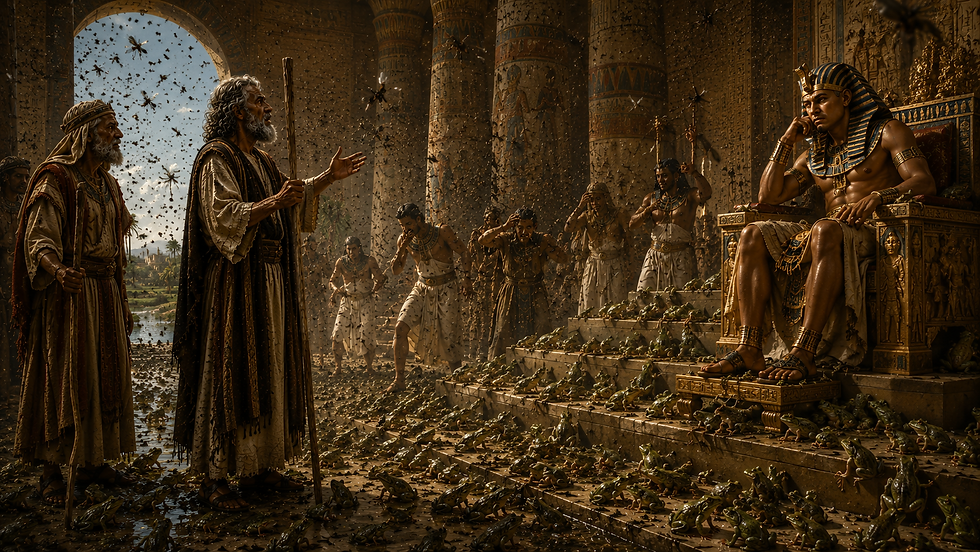
Frogs swarm out of the Nile and fill homes, beds, and ovens. The magicians imitate it, but Pharaoh pleads with Moses to remove the frogs, promising to let the people go. Moses lets Pharaoh set the time, so he will know there is none like the Lord. The frogs die, but when there is relief, Pharaoh hardens his heart.
Verses 16-19: The Plague of Gnats
Aaron strikes the dust and it becomes gnats on man and beast throughout Egypt. The magicians try but cannot reproduce it. They say to Pharaoh, this is the finger of God. But Pharaoh's heart is hardened and he will not listen.
Verses 20-32: The Plague of Flies
Swarms of flies fill Egypt, but God sets apart Goshen, where Israel lives, so no flies are there, making a distinction between His people and Egypt. Pharaoh offers to let them sacrifice within the land, then a little farther, but after Moses prays and the flies are removed, Pharaoh hardens his heart again and will not let them go.
Deep Insight
Watch Pharaoh's pattern, because it is the pattern of a hardening heart everywhere. Under pressure, he promises to obey. The moment relief comes, he breaks his word. This is the danger of crisis repentance, turning to God only when it hurts and forgetting Him the moment things ease. Real repentance is not bargaining for relief. It is a genuine change of heart that holds even after the pressure lifts. Pharaoh teaches us by negative example: a heart that only softens under pain and rehardens in comfort was never truly changed at all.
Tough Questions Answered
What does the finger of God mean?
It was the magicians' admission that this power was divine, beyond their secret arts. They could no longer keep up. It marks the point where even Egypt's experts recognized they were fighting God Himself. (Exodus 8:19, Luke 11:20)
Why did God spare Goshen from the flies?
To make a clear distinction between His people and the Egyptians, showing that the plagues were targeted judgments under His control, not random natural disasters. The separation displayed His care for Israel. (Exodus 8:22-23, Exodus 9:26)
Were Pharaoh's offers genuine compromises?
No. They were attempts to partially comply while keeping control, and he abandoned even those once relief came. Partial obedience that holds something back is not obedience at all. (Exodus 8:25-28, 1 Samuel 15:22)
Application (Real Life)
Beware repentance that lasts only as long as the pressure.
Do not offer God partial obedience while holding back.
Recognize God's hand at work, even when others deny it.
Trust that God distinguishes and cares for His people.
Let trials soften your heart rather than harden it.
Simple test: Does your obedience to God hold steady after the crisis passes?
Apologetics Angle
Exodus 8 shows the plagues escalating in a deliberate, ordered way, with the magicians reaching the limit of their abilities and confessing divine power. This progression undermines the idea that the plagues were merely natural coincidences, since their timing, intensity, and the sparing of Goshen all point to purposeful control. The honest portrayal of human stubbornness in Pharaoh also rings true to experience, people routinely make promises under pressure and break them in comfort. The account reflects real psychology and a God who acts with precision and purpose in history.
Cross References
Luke 11:20 - If I cast out demons by the finger of God.
Exodus 9:26 - No hail in Goshen where Israel dwelt.
1 Samuel 15:22 - To obey is better than sacrifice.
Psalm 78:45 - He sent flies and frogs that devastated them.
2 Corinthians 7:10 - Godly grief produces true repentance.
Exodus 8 Explained: Conclusion
Exodus 8 Explained shows judgment intensifying and Pharaoh's heart revealing itself. He bargains under pressure and breaks his word in relief, the classic pattern of false repentance. Meanwhile God sets His people apart and even Egypt's magicians admit the finger of God. Let trials soften you toward God rather than harden you, and give Him full obedience, not crisis bargaining.


Comments