
Exodus 13 Explained - Consecration, Remembrance, and the Pillar of Cloud and Fire
Introduction
Exodus 13 calls Israel to consecrate the firstborn and remember their redemption. Remember this day in which you came out of Egypt.
Freedom comes with remembering. God claims the firstborn as His own, establishes ways to commemorate the exodus, and then leads His people personally by cloud and fire. Redemption is to shape how Israel lives and what they never forget.
Summary
God commands that every firstborn of Israel, both human and animal, be consecrated to Him, because He spared Israel's firstborn in Egypt. He establishes the Feast of Unleavened Bread and the practice of redeeming the firstborn as lasting reminders to be taught to children. Israel is led not by the short road but by the way of the wilderness toward the Red Sea, and they carry Joseph's bones as he requested. God Himself goes before them in a pillar of cloud by day and a pillar of fire by night, never leaving them.
Key Themes
Consecrate the firstborn: They belong to God who spared them.
Remember the redemption: Commemorate the exodus forever.
Teach the children: Pass the story to the next generation.
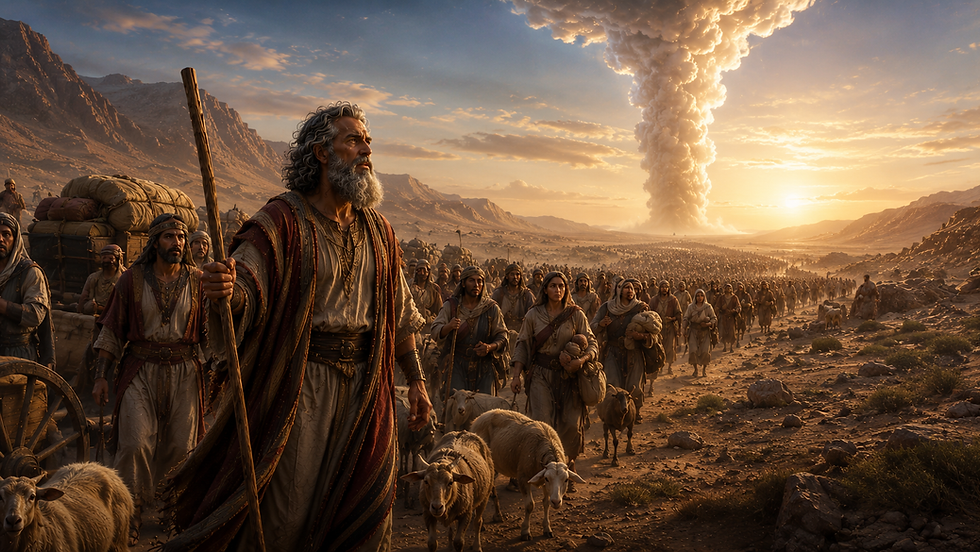
God's leading: The pillar of cloud and fire.
God's wise guidance: He leads the longer, safer way.
Exodus 13 Explained: Verse-by-Verse Breakdown
Verses 1-2: Consecrate the Firstborn
God tells Moses to consecrate to Him every firstborn, the first to open the womb among Israel, both of man and beast. They belong to Him because He spared them in the final plague.
Verses 3-10: Remember and Keep the Feast
Moses tells the people to remember this day they came out of Egypt by the strong hand of the Lord. They are to eat unleavened bread for seven days and observe the feast in the promised land. It will be like a sign on the hand and forehead, that God's law may be in their mouths, teaching their children.
Verses 11-16: Redeeming the Firstborn
When they enter the land, every firstborn is to be set apart to the Lord, with firstborn sons and certain animals redeemed. When children ask what this means, parents are to explain that the Lord brought them out of Egypt with a mighty hand, slaying Egypt's firstborn but sparing Israel's.
Verses 17-22: The Pillar of Cloud and Fire
God does not lead them by the short road through Philistine country, lest they face war and turn back, but by the wilderness toward the Red Sea. Moses carries Joseph's bones. The Lord goes before them in a pillar of cloud by day and a pillar of fire by night, never departing from the people.
Deep Insight
Verse 17 is quietly profound. God did not lead Israel by the shortest route, because the short road went through hostile territory that would have made them lose heart and run back to Egypt. God knew His people were not ready for that battle yet. His guidance is not always the most direct path. Sometimes the wilderness road is the merciful one. When God leads you the long way around, it is not because He is lost or cruel. It is because He knows what you can handle and is protecting you from battles you are not yet ready to fight.
Tough Questions Answered
Why did God claim the firstborn?
Because He had spared Israel's firstborn during the final plague, they belonged to Him by right of redemption. Consecrating them was a continual reminder that their lives were ransomed by God's saving act. (Exodus 13:15, Numbers 3:13)
Why did God lead Israel the long way?
To spare them from immediate war that would have discouraged them and tempted them to return to Egypt. God's wise guidance protects His people, even when it means a longer, harder road. (Exodus 13:17, Deuteronomy 8:2)
What did the pillar of cloud and fire signify?
It was the visible presence of God leading and protecting His people continually, by day and night. It assured Israel that God Himself was with them every step, a comfort echoed in His promise never to leave us. (Exodus 13:21-22, Hebrews 13:5)
Application (Real Life)
Remember and mark the ways God has redeemed you.
Teach your children the story of God's salvation.
Trust God's leading even when the path seems indirect.
Recognize that detours can be God's protection.
Rest in the truth that God's presence never leaves you.
Simple test: When God leads you the long way, do you trust His wisdom or doubt His care?
Apologetics Angle
Exodus 13 emphasizes memory, ritual, and teaching children, which is exactly how a real historical event would be preserved and transmitted across generations. The detailed institution of feasts and practices tied to a specific deliverance reflects authentic commemoration rather than later myth-making. The note that Israel carried Joseph's bones connects Exodus back to Genesis, showing the continuity of God's unfolding plan. The picture of God personally guiding His people, choosing the wiser path for their good, presents a God intimately involved in the lives of His people, consistent with the relational God revealed throughout Scripture.
Cross References
Numbers 3:13 - All the firstborn are Mine.
Deuteronomy 8:2 - The Lord led you these forty years.
Genesis 50:25 - Joseph's request about his bones.
Hebrews 13:5 - I will never leave you nor forsake you.
1 Corinthians 10:1 - Our fathers were under the cloud.
Exodus 13 Explained: Conclusion
Exodus 13 Explained calls a redeemed people to remember. God claims the firstborn, establishes feasts, and commands that the story be taught to every generation. Then He leads them personally by cloud and fire, choosing the wise road over the short one. When God leads you the long way, trust His care. He goes before you, never leaves you, and is guiding you home.


Comments