
Exodus 9 Explained - Livestock, Boils, and Devastating Hail
- Jun 30
- 4 min read
Introduction
Exodus 9 unleashes three more devastating plagues on a hardening Pharaoh. Livestock, boils, and hail strike the land.
The judgments grow more severe and now touch bodies and life itself. God declares His purpose plainly: to show His power and proclaim His name in all the earth. Yet Pharaoh keeps hardening his heart.
Summary
God sends a plague on Egypt's livestock, which die, while Israel's animals are untouched. Next, boils break out on the Egyptians and even the magicians, who can no longer stand before Moses. Then God announces the worst plague yet, declaring He could have wiped Egypt out but raised Pharaoh up to display His power and proclaim His name in all the earth. A devastating hailstorm destroys crops, animals, and people caught outside, but Goshen is spared. Pharaoh confesses sin, but once the hail stops, he hardens his heart again.
Key Themes
Severe judgment: Death of livestock, boils, and hail.
God's stated purpose: To show His power and proclaim His name.
Continued distinction: Israel's livestock and Goshen are spared.
False confession: Pharaoh admits sin but does not change.
Patience in judgment: God warns before He strikes.

Exodus 9 Explained: Verse-by-Verse Breakdown
Verses 1-7: The Plague on Livestock
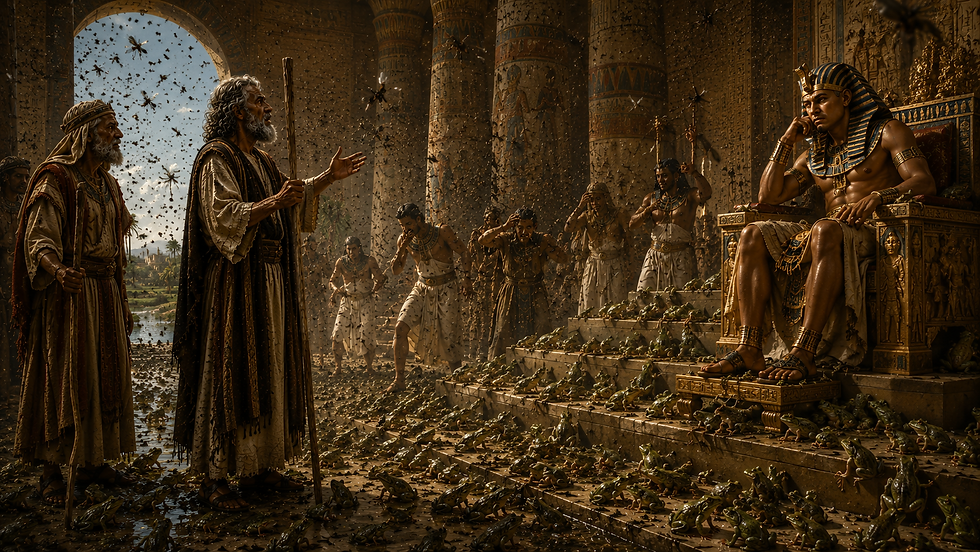
God strikes the livestock of Egypt with a severe plague, and all the Egyptian livestock in the field die. But not one animal of Israel dies. Pharaoh investigates and finds it true, yet his heart remains hardened and he will not let the people go.
Verses 8-12: The Plague of Boils
Moses throws soot into the air and it becomes boils breaking out on man and beast throughout Egypt. The magicians cannot even stand before Moses because of the boils. The Lord hardened Pharaoh's heart, and he did not listen.
Verses 13-21: Warning of the Hail
God tells Pharaoh He could have destroyed Egypt, but raised him up to show His power and proclaim His name in all the earth. He warns of unprecedented hail and urges everyone to bring their people and animals to shelter. Those who feared the word of the Lord did so, those who did not left them in the field.
Verses 22-35: The Plague of Hail
Hail with fire devastates Egypt, striking down everything in the fields, but no hail falls in Goshen. Pharaoh confesses, I have sinned, the Lord is in the right. Moses prays and the hail stops, but when Pharaoh sees the relief, he sins again and hardens his heart.
Deep Insight
Verse 16 is quoted by Paul in Romans 9. God tells Pharaoh, I have raised you up to show you My power, so that My name may be proclaimed in all the earth. This reveals that God was accomplishing a far bigger purpose than Israel's freedom. He was putting His glory on display before the watching nations. Even Pharaoh's defiance served God's purpose of making His name known. Nothing, not even the rebellion of the most powerful man on earth, falls outside God's sovereign ability to display His glory. God is never on the back foot.
Tough Questions Answered
Was it fair for God to raise up Pharaoh for judgment?
Pharaoh was a willing, repeated rebel whom God could justly have destroyed earlier. Instead God used his hardness to display power and mercy, giving repeated warnings and chances. God worked through Pharaoh's free choices, not against his will. (Exodus 9:16, Romans 9:17)
Was Pharaoh's confession of sin genuine?
No. It was driven by the crisis, not by a changed heart. As soon as relief came, he returned to defiance. True confession produces lasting change, not temporary words spoken under pressure. (Exodus 9:27-34, 2 Corinthians 7:10)
Why did God warn before sending the hail?
God's warning showed mercy even in judgment, giving Egyptians a chance to shelter their people and animals. Those who feared His word were spared loss. God's judgments are never without warning or opportunity to respond. (Exodus 9:19-21, 2 Peter 3:9)
Application (Real Life)
Remember that God's purposes are bigger than your circumstances.
Take God's warnings seriously and respond in time.
Beware confessions of sin that bring no real change.
Trust that God can display His glory even through opposition.
Fear the word of the Lord enough to act on it.
Simple test: Do you act on God's warnings, or wait until judgment forces your hand?
Apologetics Angle
Exodus 9 states an explicit purpose behind these events: that God's name be proclaimed in all the earth. This historical claim is striking, the exodus did become one of the most widely known and influential events in human history, shaping three major world religions and countless movements. The mercy embedded in judgment, warning the Egyptians to shelter before the hail, also reveals a God who is just yet patient. This nuanced portrait, neither a cruel tyrant nor an indulgent permissive deity, reflects a morally coherent God whose actions serve a revealed and far-reaching purpose.
Cross References
Romans 9:17 - I raised you up to show My power.
Exodus 8:22 - God makes a distinction for His people.
2 Peter 3:9 - God is patient, giving time to repent.
Psalm 105:32 - He gave them hail for rain.
2 Corinthians 7:10 - Worldly grief versus godly repentance.
Exodus 9 Explained: Conclusion
Exodus 9 Explained intensifies the judgment with livestock plague, boils, and devastating hail. God reveals His grand purpose: to display His power and proclaim His name in all the earth. Pharaoh confesses sin but will not truly change. Take God's warnings seriously, let His purposes be bigger than your comfort, and make sure your repentance is real, not just relief-seeking.


Comments