
Genesis 16 Explained - Hagar, Ishmael, and the Consequences of Impatience
Updated: Jun 7
Introduction
Genesis 16 explained shows a turning point in the story of Abram and Sarai. After the promise of a son in Genesis 15, time passes, and doubt begins to shape their decisions. Instead of waiting on God, they attempt to fulfill His promise through human effort. This chapter reveals both human failure and God's mercy, especially toward someone often overlooked - Hagar.

Summary
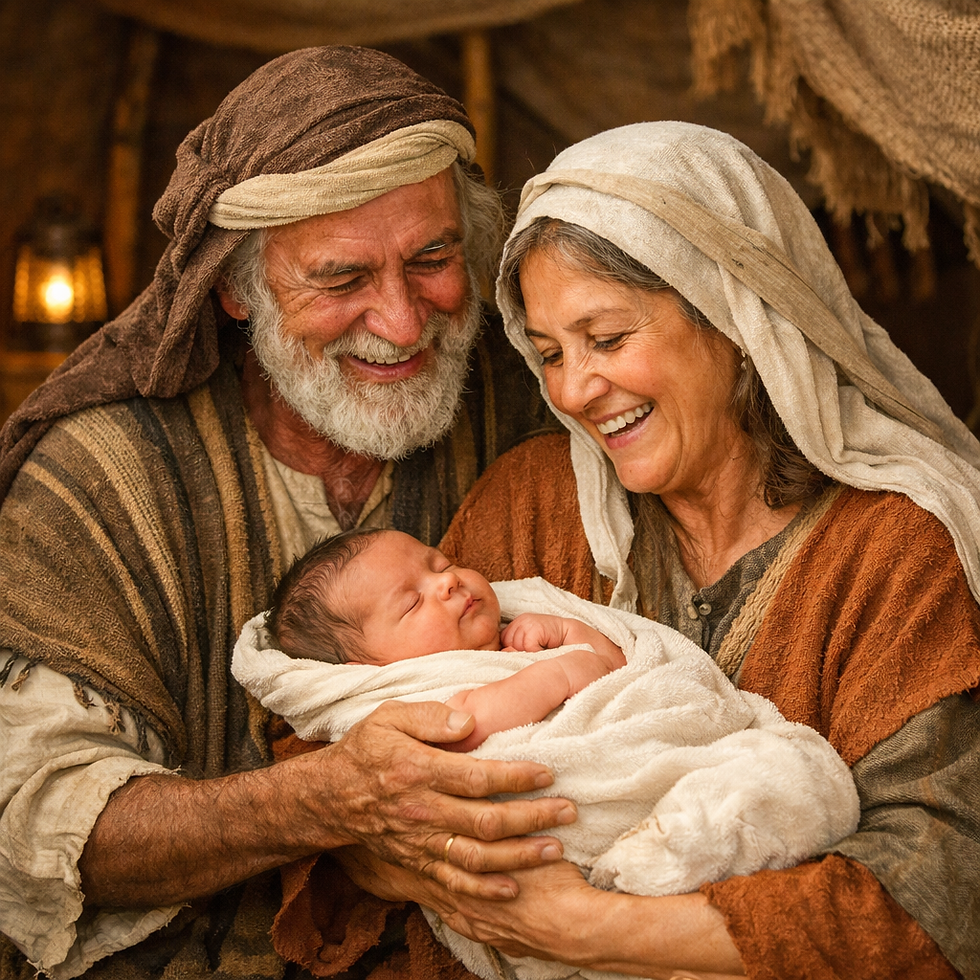
Sarai, still barren, gives her servant Hagar to Abram so they can have a child through her. Hagar conceives, but tension quickly arises between the two women. Sarai mistreats Hagar, causing her to flee into the wilderness.
There, the Angel of the Lord appears to Hagar, instructs her to return, and promises that her son will become a great nation. Hagar names the Lord "the God who sees me." She gives birth to Ishmael, and Abram is 86 years old at the time.
This chapter shows the consequences of impatience, yet also highlights God's compassion toward the vulnerable.
Key Themes
1. Impatience with God’s Timing- Abram and Sarai try to force God’s promise to happen.
2. The Consequences of Human Effort- Their decision creates conflict and lasting division.
3. God’s Compassion- God sees Hagar in her distress and responds to her.
4. God’s Faithfulness- God remains true to His promises despite human mistakes.
5. Identity and Value- Hagar encounters God personally, showing His care for all people.
Genesis 16 Explained: Verse-by-Verse Breakdown
Verses 1-2 Sarai suggests that Abram have a child through Hagar. Abram agrees, attempting to fulfill God’s promise through human means.
Verses 3-4 Hagar becomes pregnant and begins to look down on Sarai, creating tension.
Verses 5-6 Sarai mistreats Hagar, and Hagar flees into the wilderness.
Verses 7-8 The angel of the Lord finds Hagar by a spring and asks where she has come from and where she is going.
Verses 9-12 Hagar is told to return and submit. God promises that her son will multiply greatly. The child is named Ishmael, meaning "God hears."
Verses 13-14 Hagar calls God "El Roi," meaning "the God who sees me," recognizing His personal care.
Verses 15-16 Hagar returns and gives birth to Ishmael. Abram is 86 years old.
Deep Insight
Genesis 16 highlights a key spiritual struggle - waiting on God. Abram had already received a promise in Genesis 15, but instead of waiting, he acts on a human solution.
This decision leads to relational breakdown. What seemed like a practical solution creates jealousy, pain, and division. It shows that stepping outside God’s plan, even with good intentions, leads to consequences.
Hagar’s encounter with the angel of the Lord is deeply significant. This figure speaks with divine authority, suggesting a manifestation of God Himself. Hagar, an outsider and servant, becomes the first person in Scripture to give God a name: "El Roi." This reveals that God sees and cares for the overlooked and hurting.
The name Ishmael, meaning "God hears," reinforces this truth. God not only sees but also hears the cries of those in distress.
Ishmael becomes part of a complex history, showing that even faithful people can create long-term problems when they act outside God's will.
Yet God does not abandon the situation. Instead, He enters into it, showing grace not only to Abram, but also to Hagar, an Egyptian servant. This foreshadows God's heart for all nations, not just Israel.
Tough Questions Answered
Was it wrong for Abram and Sarai to use Hagar to have a child?
Yes, it was a failure of faith, even though it followed the customs of their day. Sarai, impatient with God's delay, proposed that Abram father a child through her servant Hagar, and Abram agreed. While surrogate arrangements were culturally common, the act sprang from trying to fulfill God's promise by human scheming rather than waiting on God. The consequences were immediate and lasting: jealousy, mistreatment, Hagar's flight, and ongoing family conflict. The chapter does not endorse the choice, it records its painful fallout. It teaches that running ahead of God to force His promises tends to create lasting trouble, while His timing, though hard to wait for, is best.
See also: Genesis 16:1-6, Genesis 21:8-12, Galatians 4:22-31
What is the significance of Hagar calling God "El Roi," the God who sees?
It is one of the most tender moments in Genesis. Hagar, a mistreated, runaway servant, is found by the angel of the Lord in the wilderness, and God speaks to her with compassion and promises to multiply her offspring. In response she names God El Roi, the God who sees me, marveling that the Almighty noticed and cared for an outcast foreign woman. This reveals a God who sees the overlooked, the suffering, and the lowly, not only the patriarchs. It is a powerful assurance that no one is beneath God's notice, and it anticipates the gospel's reach to the marginalized and forgotten.
See also: Genesis 16:13, Psalm 139:7-12, Luke 1:48
Application (Real Life)
Genesis 16 speaks powerfully today:
Wait on God’s timing - Rushing ahead can create unnecessary problems.
Human solutions are not always God’s solutions - Trust His plan fully.
God sees your struggles - You are never invisible to Him.
God hears your prayers - Even in difficult situations, He is listening.
God can work through mistakes - Failure does not cancel His plan.
This chapter encourages patience, trust, and confidence in God’s care.
Apologetics Angle
Genesis 16 supports important doctrines:
God’s Omniscience God sees and knows all, including those who feel forgotten.
God’s Mercy He responds to Hagar even though the situation resulted from human error.
The Deity of Christ (Foreshadowed) The angel of the Lord speaks as God, pointing to the divine nature later revealed in Christ.
Cross References
Genesis 15:4-6 - God promises Abram a son through his own body
Genesis 17:18-21 - God clarifies that Isaac, not Ishmael, is the covenant child
Genesis 21:9-13 - Conflict between Ishmael and Isaac continues
Galatians 4:22-31 - Paul uses Hagar and Sarah as a spiritual illustration
Psalm 34:15 - The Lord hears the cries of the righteous
Genesis 16 Explained: Conclusion
Genesis 16 is a deeply human chapter filled with impatience, conflict, and consequences. Yet it is also a chapter of divine compassion. God meets Hagar in her distress, proving that He sees and cares for the overlooked.
As the story moves forward into Genesis 17, God will reaffirm His covenant and make it clear that His promises are fulfilled His way, in His time.


Comments