
Genesis 21 Explained - Promise Fulfilled and Division Begins
Updated: Jun 7
Introduction
Genesis 21 explained marks a major turning point in the biblical narrative. What God promised to Abraham finally comes to pass with the birth of Isaac, while tension in Abraham’s household leads to separation and testing. This chapter reveals both the faithfulness of God and the complexity of human relationships under His plan.
Summary
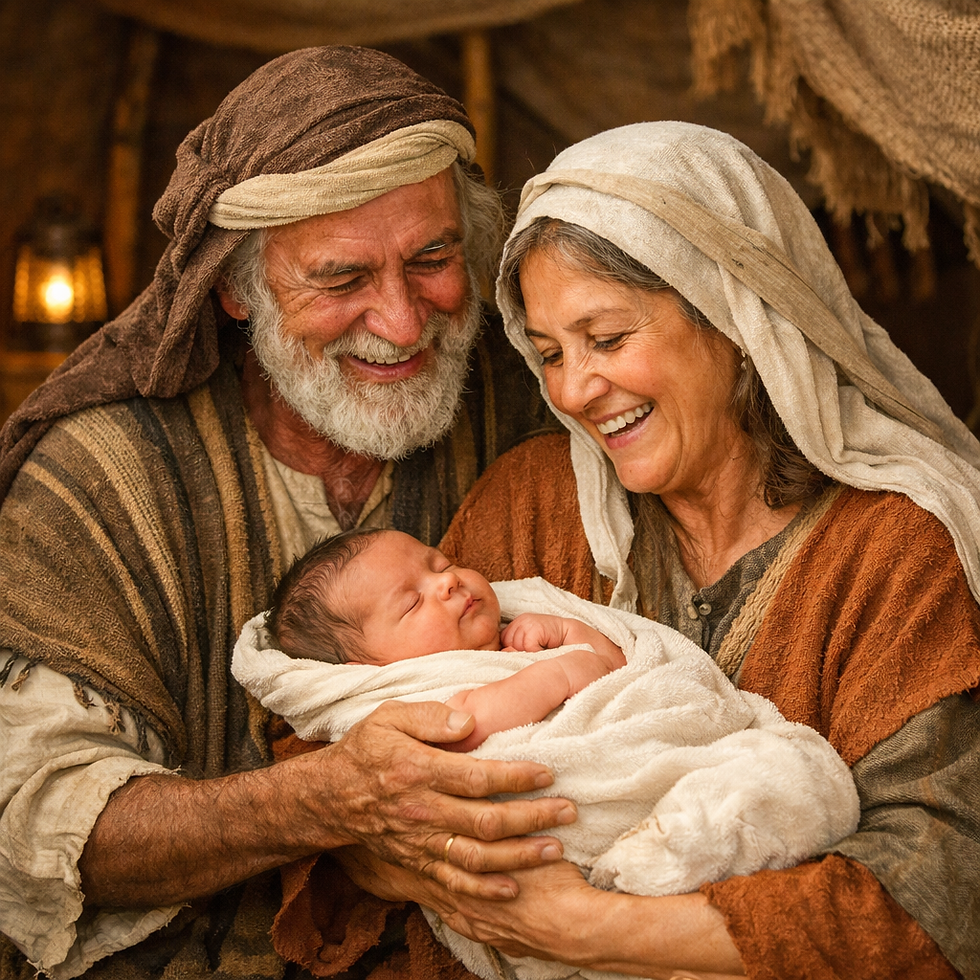
In Genesis 21, Sarah gives birth to Isaac, fulfilling God’s long-awaited promise. Joy fills Abraham’s household, but conflict arises between Sarah and Hagar, leading to Hagar and Ishmael being sent away. God protects them in the wilderness and reaffirms His promise concerning Ishmael. The chapter closes with a peaceful covenant between Abraham and Abimelech, showing God’s continued favor.
Key Themes
1. God Keeps His Promises After years of waiting, Isaac is born exactly as God said. Nothing delays or cancels God's word.
2. Joy and Laughter Fulfilled Isaac’s name means "laughter," turning Sarah’s earlier doubt into joy.
3. Separation of Promise and Flesh Isaac represents the child of promise, while Ishmael represents human effort apart from God’s timing.
4. God’s Care for the Outcast Even after being sent away, Hagar and Ishmael are not abandoned by God.
5. Peace Through God’s Blessing Abraham’s covenant with Abimelech reflects God’s visible blessing on his life.
Genesis 21 Explained: Verse-by-Verse Breakdown
Verses 1-7 - The Birth of Isaac God visits Sarah as promised, and she gives birth to Isaac in her old age. Abraham obeys God by circumcising Isaac on the eighth day.
Sarah’s laughter has changed. What was once disbelief in Genesis 18 becomes joy and testimony. She recognizes that God has done the impossible.
Verses 8-13 - Conflict Between Sarah and Hagar As Isaac grows, Sarah sees Ishmael mocking him. She demands that Abraham send Hagar and Ishmael away.
This is painful for Abraham, but God instructs him to listen to Sarah. The reason is theological, not just emotional: the covenant will continue through Isaac.
Verses 14-21 - God Rescues Hagar and Ishmael Hagar and Ishmael wander in the wilderness and nearly die of thirst. God hears the boy’s cry and opens Hagar’s eyes to a well.
God reaffirms that Ishmael will become a great nation. Even outside the covenant line, God shows compassion and faithfulness.
Verses 22-34 - Covenant with Abimelech Abimelech recognizes that God is with Abraham in all he does. They make a treaty at Beersheba to settle disputes over a well.
Abraham plants a tamarisk tree and calls on the name of the Lord, the Everlasting God. This shows growing stability and worship in Abraham’s life.
Deep Insight
Genesis 21 highlights a spiritual contrast between two sons:
Isaac - born through God’s promise
Ishmael - born through human effort
This contrast becomes a powerful biblical theme. God’s purposes are not achieved through human striving but through divine promise.
This also reveals something deeper about salvation. God’s plan is not based on human ability or timing, but on His grace and power.
The wilderness scene with Hagar is equally important. Even when people are outside the covenant line, God still sees, hears, and provides. His mercy extends beyond human boundaries.
Tough Questions Answered
Why did God tell Abraham to send Hagar and Ishmael away?
The reason was theological, not merely domestic. Although the situation grieved Abraham, God instructed him to listen to Sarah because the covenant line of promise would run through Isaac, not Ishmael. The two sons represented two different things, which Paul later draws out as a contrast between the child of promise born by faith and the child born of human scheming. God was preserving the clarity of His promise. Importantly, God did not abandon Hagar and Ishmael; He met them in the wilderness, saved them, and promised to make Ishmael a great nation. The chapter shows both God's faithfulness to the covenant and His compassion for those outside it.
See also: Genesis 21:10-13, Genesis 21:17-20, Galatians 4:28-31
Why does Sarah's laughter in Genesis 21 differ from her laughter earlier?
It marks a transformation from doubt to joy. In Genesis 18, Sarah laughed in disbelief at the promise that she would bear a son in her old age. Now, holding the child God promised, she says God has brought her laughter and everyone who hears will laugh with her. The same response, laughter, has changed in meaning entirely, from skeptical to celebratory. It testifies that God kept His word against all natural odds. Isaac's very name means he laughs, a permanent reminder that God delights to do the impossible and turn our doubt into rejoicing when His promises come to pass.
See also: Genesis 21:6-7, Genesis 18:12-15, Romans 4:19-21
Application (Real Life)
1. Trust God’s Timing- God fulfilled His promise to Abraham and Sarah, even when it seemed impossible. Waiting does not mean God has forgotten.
2. Let Go of What God Has Not Promised- Ishmael represented a human solution. Sometimes we must release what we tried to build outside of God’s will.
3. God Sees You in the Wilderness- Hagar’s story reminds us that God sees those who feel abandoned or overlooked.
4. Walk in Peace with Others- Abraham’s agreement with Abimelech shows the importance of living in peace where possible.
Apologetics Angle
Genesis 21 supports key theological truths:
God’s Sovereignty- God determines the line of promise, showing His authority over history and salvation.
Foreshadowing of Salvation by Promise- Isaac’s birth points forward to salvation not by human effort but by divine intervention.
God’s Compassion Beyond Israel- God’s care for Ishmael shows His concern for all nations, not just one lineage.
Connection to the Gospel- The distinction between Isaac and Ishmael is later explained in Galatians 4, showing the difference between law and grace.
Cross References
Genesis 18:10-14 - God promises Isaac’s birth despite Sarah’s doubt
Genesis 16:10 - God promises to multiply Ishmael’s descendants
Galatians 4:22-31 - Paul explains Isaac and Ishmael as allegory of promise vs law
Romans 9:7-9 - God’s promise comes through Isaac, not Ishmael
Psalm 34:15 - God hears the cry of the afflicted, like Ishmael
Isaiah 41:10 - God’s presence reassures in moments of fear
Genesis 21 Explained: Conclusion
Genesis 21 explained reveals the faithfulness of God in fulfilling His promises and the reality of difficult decisions along the journey of faith. Isaac’s birth confirms that nothing is impossible for God, while Hagar’s story reminds us that God’s mercy reaches even into the wilderness.
This chapter teaches that God’s plans prevail, His promises stand firm, and His compassion never fails.


Comments