
Genesis 10 Explained - The Table of Nations and the Spread of Humanity
Updated: Jun 7
Introduction
Genesis 10 explained presents what is often called the "Table of Nations." This chapter traces how humanity spread across the earth after the flood through the descendants of Noah’s three sons - Shem, Ham, and Japheth. While it may seem like a list of names, it actually reveals God’s plan for the nations and the unity of the human race.

Summary
Genesis 10 outlines the genealogies of Noah’s sons and shows how different nations and peoples developed from them. Japheth’s descendants spread into distant regions, Ham’s descendants include powerful kingdoms like Babel and Egypt, and Shem’s line leads toward Abraham and ultimately God’s covenant people. The chapter emphasizes that all nations come from one family.
Key Themes
1. Unity of Humanity All people share a common origin through Noah.
2. The Spread of Nations Humanity begins to fill the earth, fulfilling God’s command.
3. God’s Sovereign Plan Nations and boundaries are not random - they are part of God’s design.
4. The Rise of Kingdoms Early civilizations and cities begin to form.
5. The Line of Promise Shem’s lineage is highlighted as the path leading to God’s redemptive plan.
Genesis 10 Explained: Verse-by-Verse Breakdown
Verses 1-5 (Japheth’s Descendants) Japheth’s line spreads outward, forming coastal and distant nations. These are often associated with regions outside the Near East.
Verses 6-20 (Ham’s Descendants) Ham’s line includes Cush, Egypt, Put, and Canaan. Notably, Nimrod is introduced as a powerful ruler and founder of cities like Babel.
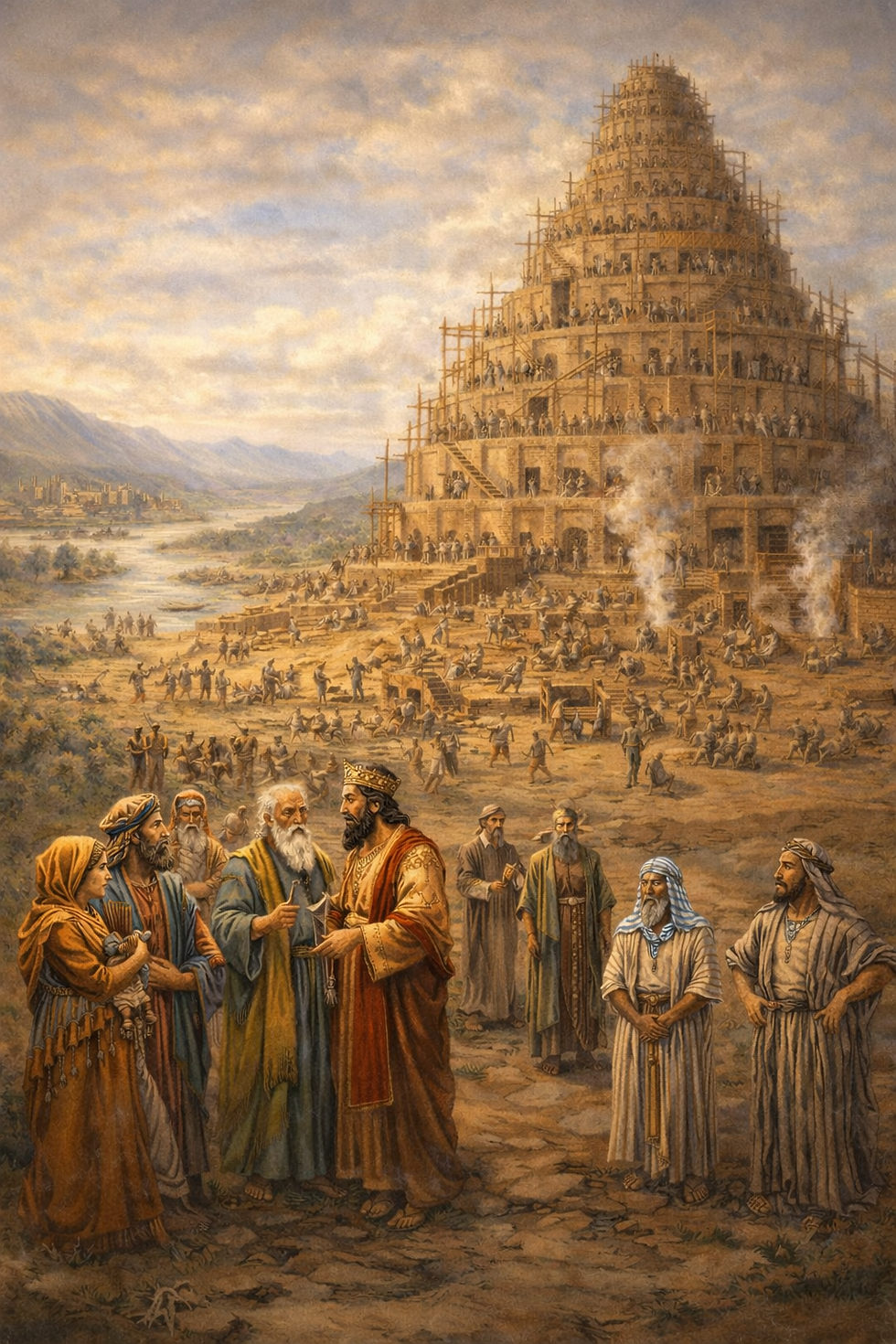
Verses 8-10 (Nimrod) Nimrod is described as a mighty hunter and kingdom builder. Babel becomes a central location, which will be important in the next chapter.
Verses 21-31 (Shem’s Descendants) Shem’s line is detailed, leading toward Eber, from whom the term "Hebrew" is derived. This lineage will eventually lead to Abraham.
Verse 32 The chapter concludes by emphasizing that all nations spread from these families after the flood.
Deep Insight
Genesis 10 is foundational for understanding the origin of nations. It shows that diversity in languages, cultures, and regions comes from a shared human family.
The mention of Nimrod is significant. He represents early human power and the beginning of organized kingdoms, some of which oppose God. His connection to Babel sets the stage for Genesis 11.
Shem’s lineage is especially important because it carries the promise forward. The Bible begins to narrow its focus from all humanity to a specific line through which God will bring redemption.
This chapter also reminds us that history is not random. God is guiding the development of nations and peoples according to His purposes.
Tough Questions Answered
Why does the Bible include a long Table of Nations in Genesis 10?
Because it grounds the whole human race in one family and sets the stage for God's plan of redemption. The Table of Nations traces seventy nations descending from Noah's three sons, showing that every people group on earth shares a common origin. This matters theologically: there is one human family, all bearing God's image, all fallen, all in need of grace. It also frames the call of Abraham in the next chapters, where God chooses one family to bless all these nations. Far from being a dry list, it is the map of the world that the gospel will one day reach, fulfilled when people from every nation worship the Lamb.
See also: Genesis 10:32, Acts 17:26, Revelation 7:9
Who was Nimrod, and why does he stand out in the genealogy?
Nimrod is singled out as a mighty hunter and the founder of a kingdom that included Babel, the city that becomes the focus of the next chapter. He represents the rise of human empire-building and centralized power apart from God. The genealogy pauses on him because he embodies a recurring biblical theme: human strength organized in pride and self-glory rather than submission to God. Babylon, which begins with Nimrod, becomes a symbol throughout Scripture of arrogant rebellion against God, all the way to the book of Revelation. He stands out as a warning that greatness pursued without God leads to Babel, not blessing.
See also: Genesis 10:8-10, Genesis 11:4, Revelation 18:2
Application (Real Life)
Genesis 10 has meaningful implications:
All people are connected - Every nation shares a common origin.
God is in control of history - Nations rise and fall under His authority.
Diversity is part of God’s design - Different cultures and peoples reflect His creativity.
Your place in the world matters - God has positioned people intentionally.
God’s plan is unfolding - Even through generations, He is working toward redemption.
This chapter encourages us to see humanity through God’s perspective - unified yet diverse, all under His sovereignty.
Apologetics Angle
Genesis 10 supports key truths:
The Unity of the Human Race- All people descend from Noah, affirming the biblical view of human equality.
God’s Sovereignty Over Nations- The formation of nations is part of God’s plan, not chance.
Foreshadowing of Christ- Shem’s line ultimately leads to Jesus, through whom all nations are blessed.
Cross References
Genesis 9:18-19 - The sons of Noah are the source of all nations.
Deuteronomy 32:8 - God establishes boundaries for nations.
Acts 17:26 - God made all nations from one man.
Genesis 11:1-9 - The Tower of Babel explains language division.
Matthew 28:19 - The gospel is for all nations.
Revelation 7:9 - People from every nation worship God.
Genesis 10 Explained: Conclusion
Genesis 10 shows how humanity spread across the earth after the flood and establishes the foundation for all nations. It reminds us that every culture and people group is part of God’s design. More importantly, it points forward to God’s plan of redemption that will reach every nation through Christ.

Comments