
Hebrews 8 Explained - A Better Covenant and a Better Ministry
Introduction
Hebrews 8 makes a claim that would have been stunning to any first-century Jewish reader: the old covenant is obsolete.
Not wrong. Not bad. Not a mistake. But obsolete, because something better has arrived. The author proves it from the prophet Jeremiah, quoting the longest Old Testament passage cited in the New Testament. The new covenant was not Paul's innovation or the church's invention. God promised it centuries before Christ through Israel's own prophets.
Summary
The main point: we have a high priest who is seated at the right hand of the throne of the Majesty in heaven, a minister of the true tabernacle set up by God, not man. Every earthly priest serves a copy and shadow of the heavenly reality. Moses was warned to make everything according to the pattern shown on the mountain because the earthly tabernacle was always just a copy. Jesus serves in the original. He is the mediator of a better covenant established on better promises. The old covenant had fault: it depended on Israel's faithfulness, which failed. God promised a new covenant through Jeremiah: He would write His law on their hearts, be their God, forgive their sins, and they would all know Him. By calling it new, God made the first obsolete. What is obsolete and aging is about to disappear.
Key Themes
The heavenly original and the earthly copy. The tabernacle was real and important, but it was always a shadow.
A better covenant on better promises. The new covenant does not rest on human faithfulness. It rests on God's.
The law written on the heart. External commands carved in stone could not change the heart. The Spirit does.
Full forgiveness. Under the new covenant, God will remember their sins no more.
The old covenant's obsolescence was announced in the Old Testament itself. Jeremiah said so.

Hebrews 8 Explained: Verse-by-Verse Breakdown
Verses 1-6: The True Tabernacle and the Better Ministry
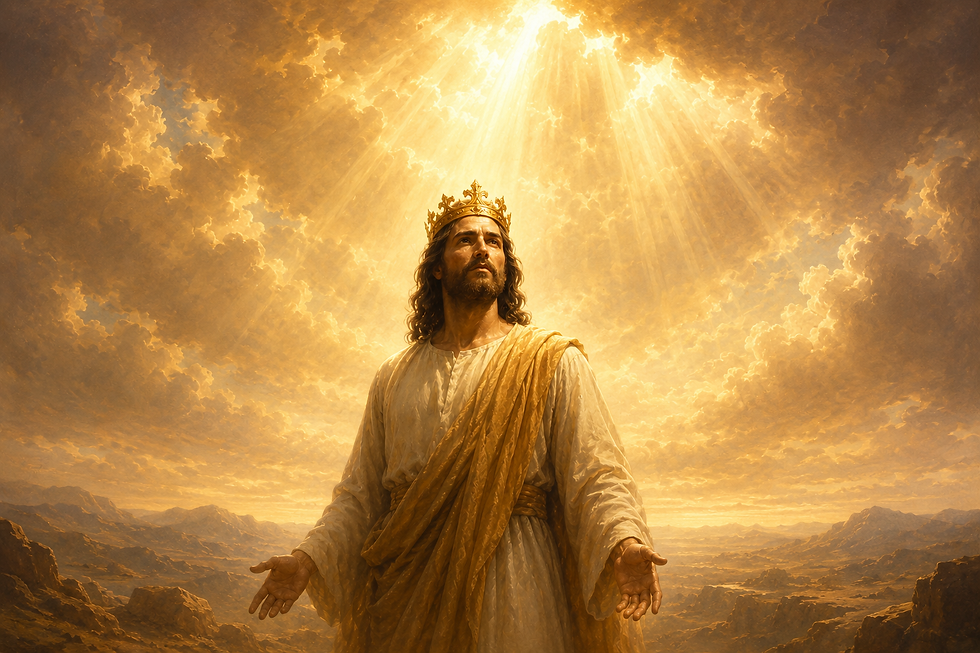
The main point of what is being said: we have such a high priest, seated at the right hand of the throne of the Majesty in heaven. He serves in the sanctuary, the true tent that the Lord set up, not man. Every earthly high priest is appointed to offer gifts and sacrifices. This priest also must have something to offer. The earthly priests serve a copy and shadow of the heavenly things. Moses was warned when building the tabernacle to make everything according to the pattern shown on the mountain. Christ has obtained a ministry that is as much more excellent than the old as the covenant He mediates is better.
Verses 7-13: The New Covenant from Jeremiah
If the first covenant had been faultless, there would have been no need for a second. God found fault with the people. He promised through Jeremiah a new covenant: not like the one made with their fathers. He would put His laws in their minds and write them on their hearts. He would be their God and they would be His people. No one would need to teach another saying know the Lord, for all would know Him. He would be merciful to their iniquities and remember their sins no more. By speaking of a new covenant He made the first one obsolete. What is obsolete and growing old is about to disappear.
Deep Insight
The fault the author identifies with the old covenant was not in the law itself. Romans 7:12 says the law is holy, righteous, and good. The fault was with the people. They could not keep it. The old covenant exposed the problem but could not solve it. The new covenant does not lower the standard. It provides what the old covenant could not: a transformed heart, the indwelling Spirit, and a High Priest whose sacrifice actually removes sin rather than covering it year after year. The old covenant was scaffolding. The new covenant is the building.
Tough Questions Answered
Q: Does the new covenant replace Israel with the church?
Jeremiah's new covenant was made with the house of Israel and Judah (verse 8). Gentile believers are grafted into the covenant people through Christ (Romans 11:17-18). The church does not replace Israel. It is expanded Israel, the fulfillment of what God always intended: one people from every nation, reconciled to God through the Messiah. Ethnic Israel has not been discarded. Paul makes clear in Romans 9-11 that God has not rejected His people.
See also: Romans 11:17-24, Galatians 3:29, Ephesians 2:11-13
Q: What does it mean that God will remember sins no more?
It does not mean God loses the information. It means He will no longer hold sin against the account of those in the new covenant. The legal record is cleared. When God says He will not remember, He means He will not bring the charge. There is no outstanding debt. The forgiveness under the new covenant is final, not provisional, not requiring annual renewal.
See also: Micah 7:19, Psalm 103:12, Colossians 2:14
Application (Real Life)
God's law is now written on your heart by the Spirit. Obedience is not external pressure. It is internal transformation.
Your sins are not remembered by God. Stop carrying what He has already cleared from the record.
You know God personally. Not through a priest or a mediator beyond Christ. Directly. That is the new covenant promise.
The old religious system was always pointing here. Do not go backward when forward has arrived.
Simple closing test: Are you living as someone whose sins God no longer remembers, or as someone still trying to pay a debt that has been cancelled?
Apologetics Angle
Critics who claim Christianity invented the new covenant concept must reckon with Jeremiah 31, written 600 years before Christ. The prophet, writing within the existing Mosaic framework, announces that a new covenant is coming that will be fundamentally different. It will be internal, universal among God's people, and based on complete forgiveness. No human author writing in the sixth century BC could have designed a text that so precisely anticipates the work of Christ. The new covenant is not the church's idea. It is God's promise, and Hebrews simply shows us that Jesus is the one who delivers it.
Cross References
Jeremiah 31:31-34 - The new covenant promise. The longest OT quote in the New Testament.
Exodus 25:40 - Moses warned to make the tabernacle according to the heavenly pattern.
Romans 7:12 - The law is holy and righteous and good. The fault was with the people, not the law.
Ezekiel 36:26-27 - I will give you a new heart and put a new spirit within you. Parallel covenant promise.
2 Corinthians 3:6 - God has made us competent as ministers of a new covenant, not of letter but of Spirit.
Hebrews 8 Explained: Conclusion
Hebrews 8 Explained shows that the old covenant was always temporary scaffolding. It was real, it was holy, and it served its purpose. But it was never the building.
The new covenant is better in every way. Better promises. A better mediator. A better tabernacle. Laws written on the heart. Sins remembered no more. God Himself as the covenant keeper so the covenant cannot fail. That is not an upgrade. It is a transformation.


Comments