
Hebrews 1 Explained - God Has Spoken Through His Son
Introduction
Hebrews 1 opens with the boldest claim in the New Testament: God has spoken His final word, and that word is His Son.
The author writes to Jewish believers who are under pressure to abandon Christianity and return to Judaism. His opening move is not gentle persuasion. It is a comprehensive declaration that Jesus is superior to every category of revelation and every messenger God ever sent, including the angels.
Summary
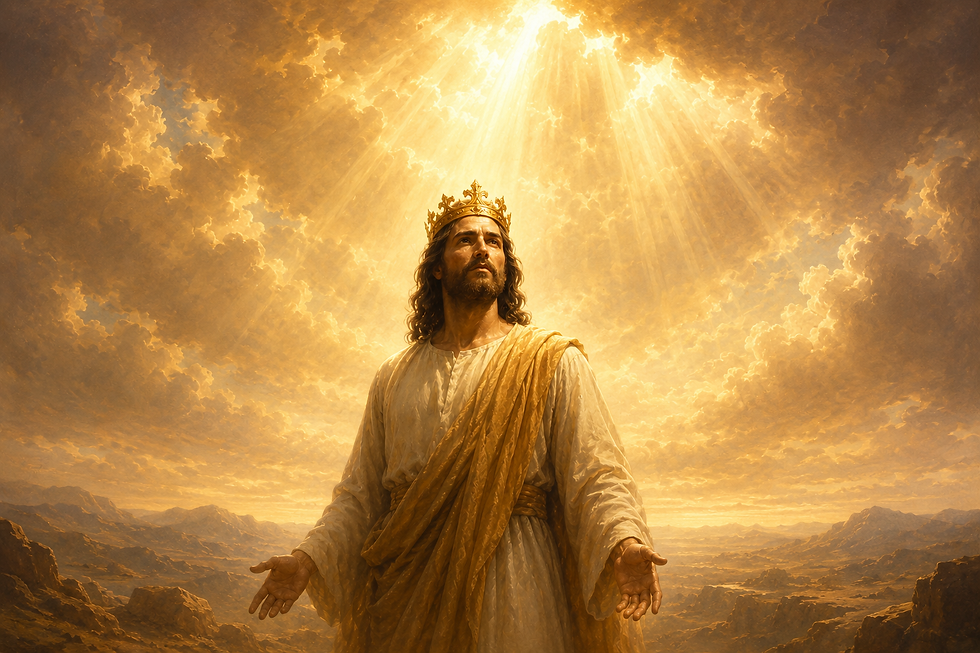
God spoke through prophets in the past. Now He has spoken through His Son, the heir of all things, through whom He created the world. The Son is the radiance of God's glory, the exact imprint of His nature, upholding the universe by the word of His power. After making purification for sins, He sat down at the right hand of the Majesty on high. The author then stacks seven Old Testament quotations to prove from Israel's own Scriptures that the Son is superior to all angels. Angels are servants. The Son is sovereign.
Key Themes
Final revelation. Jesus is not one message among many. He is the climax and completion of all God has said.
The full deity of Christ. The Son is the exact imprint of God's nature. Not a reflection. Not a copy. The precise representation.
The finished work of the cross. He made purification for sins and sat down. The sitting signals completion.
Superiority to angels. The audience revered angelic mediation. The author proves from Scripture that the Son outranks every angel.
The eternal throne. The Son's kingdom has no end. His righteousness and reign are permanent.

Hebrews 1 Explained: Verse-by-Verse Breakdown
Verses 1-3: The Son as God's Final Word
God spoke in the past through prophets in many ways and at many times. Now He has spoken through His Son. The Son is the heir of all things and the agent of creation. He is the radiance of God's glory and the exact imprint of His nature. He upholds the universe by the word of His power. He made purification for sins. Then He sat down at the right hand of the Majesty on high. These three verses contain more Christology than most full chapters in the Bible.
Verses 4-14: Superior to Angels
The Son became as much superior to angels as the name He inherited is more excellent than theirs. The author then fires seven Old Testament quotations in rapid succession. God never said to any angel: You are my Son (Psalm 2:7). God never told an angel to sit at His right hand (Psalm 110:1). Angels are winds and flames serving God. The Son is addressed as God with an eternal throne (Psalm 45:6-7). The earth will perish but the Son remains (Psalm 102:25-27). Angels are ministering spirits sent to serve those who inherit salvation. The Son is worshiped by them. The contrast could not be sharper.
Deep Insight
The phrase exact imprint of His nature in verse 3 uses the Greek word charakter, from which we get the English word character. In the ancient world it referred to the impression left by a seal or stamp. The Son is not like God. He is the precise impression of God. Every attribute, every quality, every perfection of the Father is present in the Son without diminishment. This is the strongest possible language for full deity short of saying God outright, and the author has already called Him God directly in verse 8 quoting Psalm 45.
Tough Questions Answered
Q: Does Hebrews 1:4 mean Jesus became divine after the resurrection?
No. The becoming in verse 4 refers to His exaltation in His role as the God-man after the resurrection, not to a change in His divine nature. Verses 2-3 make clear He was the agent of creation and the radiance of God's glory before the incarnation. The name He inherited is the publicly declared, universally acknowledged title of Son and Lord that was proclaimed through the resurrection (Romans 1:4). His nature did not change. His position was glorified.
See also: John 1:1-3, Romans 1:4, Philippians 2:9-11
Q: Does "when God brings His firstborn into the world" in Hebrews 1:6 mean Jesus was born or created like a baby entering existence?
No. Two phrases trip people up here, and both sound like creation in modern English. Let's take them in order.
First, firstborn. The Greek is prototokos. In English it sounds like birth order, the first baby out of the womb. But in Scripture it is a title of rank and inheritance, not a record of who existed first. God calls Israel His firstborn though Israel was not His first nation (Exodus 4:22). David is called firstborn though he was the youngest of eight sons (Psalm 89:27). The word marks supreme status and heir rights. It says nothing about origin.
Second, brings into the world. This sounds like a delivery room, a baby being brought into existence. It is not. The Greek does not describe creation or birth. It describes God leading the Son into the inhabited world, a public presentation of the Son to creation, most likely His entrance at the incarnation or His exaltation. The world did not produce Him. The Father presents Him to it. The One being brought in already existed as the agent of creation (verse 2) and the radiance of God's glory (verse 3). You cannot bring in someone who is not already there.
Then comes the seal. When the Father presents the Son, He commands the angels to worship Him. Worship belongs to God alone. A created being who receives worship is an idol. So the firstborn brought into the world is not a baby and not a creature. He is the eternal Son, presented to a world He Himself made, receiving the worship only God can rightly take.
See also: Exodus 4:22, Psalm 89:27, John 1:1-3, Colossians 1:15-18, Revelation 5:11-14
Application (Real Life)
Jesus is God's final word. Every question about God is answered in Christ. Stop looking elsewhere.
The cross is finished. He sat down. You are not waiting for God to do something more for your salvation. It is done.
No created being is worthy of the worship due to Christ. Not angels, not saints, not spiritual experiences.
The Son holds the universe together right now. Your circumstances are not outside His sustaining power.
Simple closing test: Is there anything or anyone you have elevated to a place in your life that belongs only to Christ?
Apologetics Angle
Hebrews 1 is one of the strongest passages in Scripture against the claim that Jesus was a created being or a lesser divine figure. The author quotes Psalm 45:6 directly applying the title God to the Son. He quotes Psalm 102:25-27, a passage addressed to Yahweh in the Hebrew, and applies it to Jesus. This is not theological development added centuries later. This is a first-century Jewish author, writing to a Jewish audience, using their own Scriptures to establish the full deity of Christ. Any theology that demotes Jesus below full deity must explain away these quotations.
Cross References
John 1:1-3 - In the beginning was the Word, and the Word was God, and through Him all things were made.
Colossians 1:15-17 - Christ is the image of the invisible God, the firstborn over all creation, creator of all things.
Psalm 110:1 - The Lord said to my Lord: sit at my right hand until I make your enemies your footstool.
Philippians 2:9-11 - God highly exalted Him and gave Him the name above every name.
Psalm 45:6-7 - Your throne, O God, is forever and ever. Applied to Christ in Hebrews 1:8.
Hebrews 1 Explained: Conclusion
Hebrews 1 Explained gives us the highest possible starting point: God has spoken in His Son, and His Son is God. Not an angel. Not a prophet. Not a messenger. The radiance of God's glory. The exact imprint of His nature. The one who made purification for sins and sat down.
Hebrews will spend the next twelve chapters unpacking what that means. But the foundation is laid here. Jesus is superior. To everything. To everyone. Without qualification and without competition.


Comments