
Exodus 30 Explained - The Altar of Incense, Ransom, and Holy Oil
Introduction
Exodus 30 describes the altar of incense, the atonement money, the basin, and the holy oil. Aaron shall burn fragrant incense on it every morning.
God gives instructions for the final pieces of tabernacle worship. The altar of incense, the ransom for souls, the bronze basin for washing, the anointing oil, and the sacred incense. Each element teaches about prayer, atonement, cleansing, and consecration.
Summary
God describes the golden altar of incense, where fragrant incense is burned morning and evening before the Lord. He establishes a ransom payment, a half shekel from every person counted, as atonement money for the service of the tabernacle, the same for rich and poor. He commands a bronze basin for the priests to wash their hands and feet before serving. He gives the recipe for the holy anointing oil to consecrate the tabernacle and priests, and the sacred incense, both reserved exclusively for holy use.
Key Themes
The altar of incense: A picture of prayer rising to God.
Atonement money: A ransom, the same for rich and poor.
The bronze basin: Cleansing before service.
Holy anointing oil: Setting apart for God's use.
Set apart as holy: Sacred things reserved for God alone.

Exodus 30 Explained: Verse-by-Verse Breakdown
Verses 1-10: The Altar of Incense
A golden altar of incense stands before the veil. Aaron burns fragrant incense on it every morning and evening, a regular incense before the Lord throughout the generations. Once a year atonement is made on its horns. It is most holy to the Lord.
Verses 11-16: The Atonement Money
When the people are counted, each gives a half shekel as a ransom for his life, so no plague comes upon them. Rich and poor give the same amount. The money is used for the service of the tent of meeting, a memorial before the Lord to make atonement.
Verses 17-21: The Bronze Basin
A bronze basin is placed between the tent and the altar, filled with water. Aaron and his sons must wash their hands and feet before entering the tent or approaching the altar, so they will not die. It is a lasting statute for cleansing before service.
Verses 22-38: The Anointing Oil and Incense
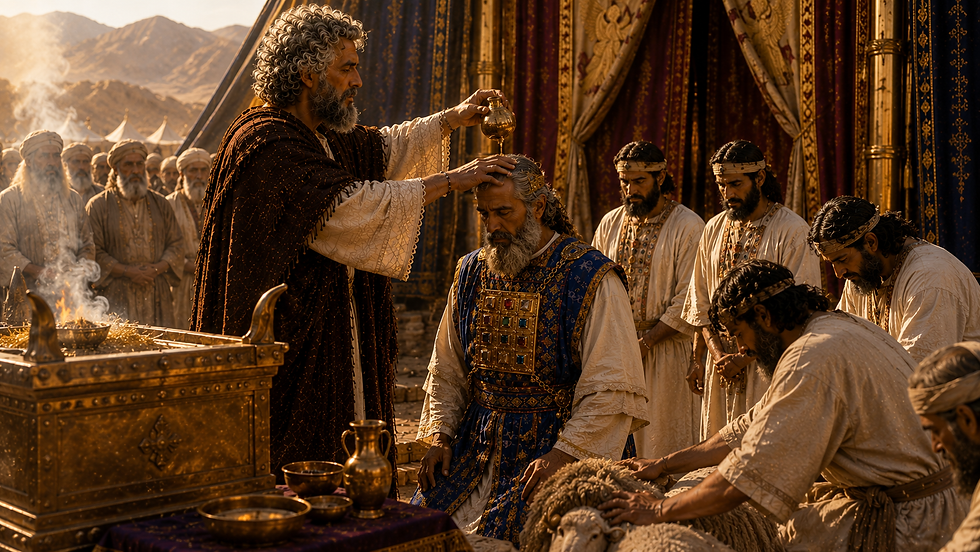
God gives the recipe for the holy anointing oil of fine spices to consecrate the tabernacle, its furnishings, and the priests. It must not be used for common purposes. Likewise, the sacred incense of fragrant spices is holy to the Lord and must not be copied for personal use, on pain of being cut off.
Deep Insight
The altar of incense, burning continually before the veil, is a beautiful picture of prayer. Scripture later says the prayers of the saints rise before God like incense. Notice where this altar stood, right before the veil, closest to God's presence. Prayer brings us nearest to God. And notice it burned morning and evening, continually. Our prayers are meant to rise to God as a constant, pleasing fragrance, not an occasional emergency call. The God who designed this altar delights in the steady, fragrant rising of His people's prayers before His throne.
Tough Questions Answered
What does the altar of incense teach about prayer?
The rising incense pictures prayer ascending to God as a pleasing fragrance. Revelation links incense with the prayers of the saints. It teaches that prayer is meant to be continual and that it draws us near to God's presence. (Exodus 30:8, Revelation 5:8)
Why did rich and poor pay the same ransom?
Because every life is of equal value before God, and atonement cannot be bought with greater wealth. The equal half shekel taught that all stand on level ground before God and all need the same redemption. (Exodus 30:15, Acts 10:34)
Why must the priests wash before serving?
Washing symbolized the cleansing required to approach a holy God. It teaches that we need cleansing to serve and worship Him, ultimately fulfilled in the washing Christ provides. (Exodus 30:20, Titus 3:5)
Application (Real Life)
Let your prayers rise continually like fragrant incense.
Remember that all people are equal in value before God.
Seek the cleansing God provides before serving Him.
Treat the holy things of God with reverence.
Draw near to God in prayer, the place closest to His presence.
Simple test: Is prayer a continual fragrance in your life, or only an emergency call?
Apologetics Angle
Exodus 30 contains the striking principle that rich and poor pay the same atonement price, an early and profound declaration of the equal worth of every human soul before God. In a deeply stratified ancient world, this leveling of all people before their Creator was revolutionary and undergirds the biblical foundation for human equality. The altar of incense and its connection to prayer also reappears in Revelation, showing the consistency of biblical imagery across both Testaments. These threads reveal a unified Scripture with a coherent vision of God, prayer, and human dignity.
Cross References
Revelation 5:8 - Incense, which are the prayers of the saints.
Psalm 141:2 - Let my prayer be counted as incense.
Acts 10:34 - God shows no partiality.
Titus 3:5 - He saved us by the washing of regeneration.
1 Peter 1:18-19 - Ransomed by the precious blood of Christ.
Exodus 30 Explained: Conclusion
Exodus 30 Explained describes the altar of incense, the ransom money, the basin, and the holy oil. The incense pictures our prayers rising to God, the equal ransom shows every soul's equal worth, and the washing points to the cleansing we need. Let your prayers rise continually before God, rest in the ransom Christ paid, and draw near to the One who delights in the fragrance of His people's prayers.

Comments