
Christianity vs Buddhism: Key Differences Explained
Quick Summary
Christianity vs Buddhism reveals two very different answers to life’s biggest questions. Christianity teaches that a personal God created the world and offers salvation through Jesus Christ. Buddhism, by contrast, is largely non-theistic and focuses on ending suffering through personal enlightenment.
The key difference in Christianity vs Buddhism centers on grace versus self-effort, and a personal God versus an impersonal ultimate reality.
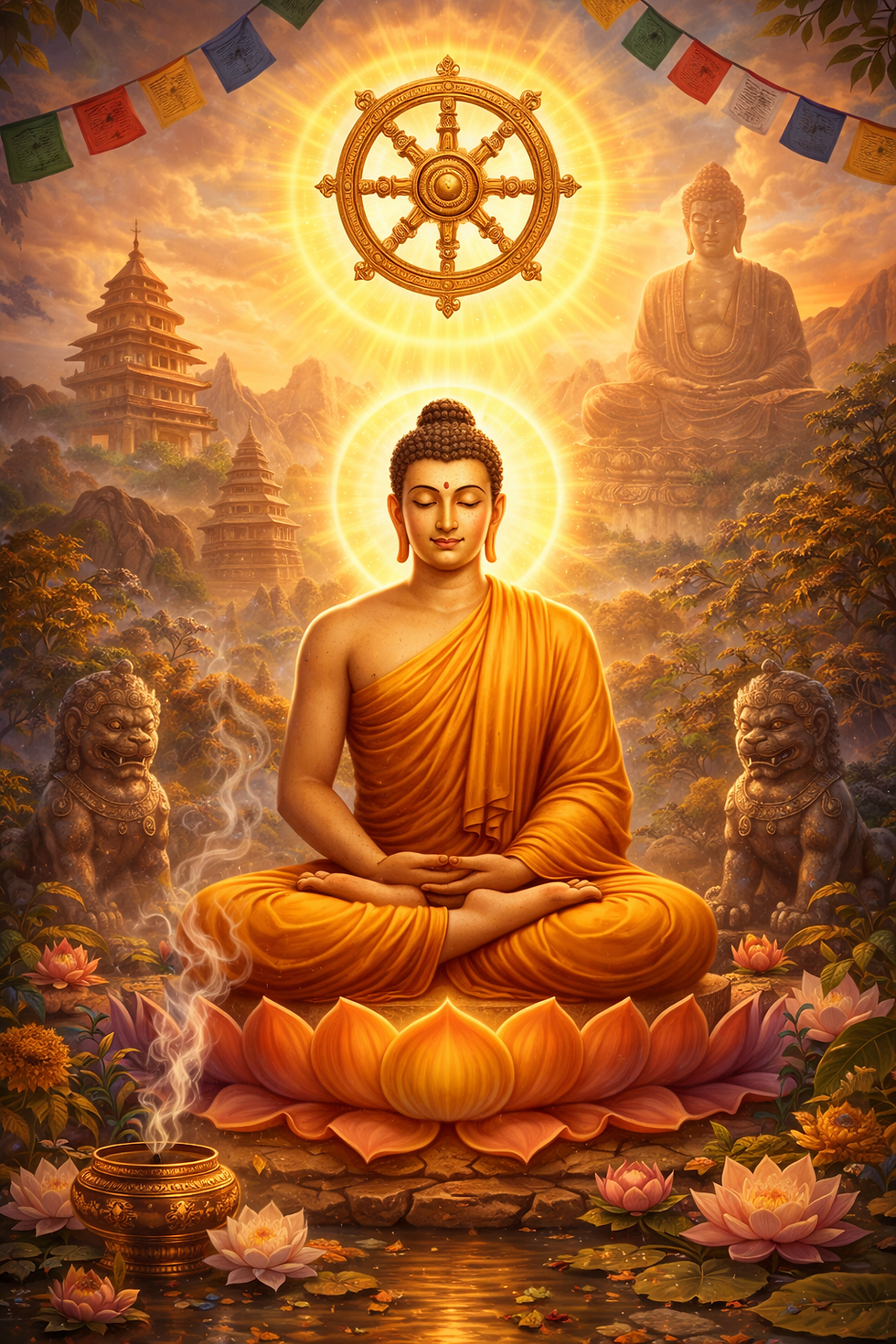
What This Belief Teaches (Buddhism)
Buddhism began with Siddhartha Gautama, known as the Buddha. It teaches that life is marked by suffering (dukkha), caused by desire and attachment.
Core Beliefs
The Four Noble Truths
The Eightfold Path
The goal of reaching Nirvana (freedom from the cycle of rebirth)
Buddhism generally does not teach belief in a creator God. Instead, it emphasizes personal discipline, meditation, and wisdom as the path to liberation.
Human Problem: Suffering caused by desire and ignorance
Solution: Self-effort through enlightenment and detachment
Christianity vs Buddhism: What Christianity Teaches
Christianity teaches that there is one personal, holy God who created all things and desires a relationship with humanity.
Core Beliefs
God is personal and knowable
Humans are sinful by nature
Jesus Christ is God in the flesh who died and rose again
Salvation is a gift of grace, not earned by works
Human Problem: Sin and separation from God
Solution: Salvation through Jesus Christ alone
Key Verse: “For all have sinned and fall short of the glory of God” (Romans 3:23)
Key Differences Between Christianity vs Buddhism
1. God
Christianity: One personal, loving Creator
Buddhism: No personal creator God
2. Human Nature
Christianity: Fallen in sin
Buddhism: Ignorant and attached
3. Salvation
Christianity: By grace through faith (Ephesians 2:8–9)
Buddhism: By self-effort and enlightenment
4. Jesus Christ
Christianity: The Son of God and Savior
Buddhism: Not central; at most viewed as a teacher
5. Afterlife
Christianity: Eternal life with God or separation from Him
Buddhism: Cycle of rebirth until Nirvana is reached
Christian Response to Buddhism
From a Christian perspective, Buddhism correctly recognizes that suffering is a real and universal problem. However, it misdiagnoses the root issue.
The Bible teaches that suffering ultimately stems from sin, not merely desire. While Buddhism offers a path of self-effort, Christianity teaches that humans cannot save themselves.
Jesus provides what Buddhism cannot:
Forgiveness of sin
Reconciliation with God
A personal relationship with the Creator
As Jesus said:“I am the way and the truth and the life. No one comes to the Father except through me” (John 14:6)
Apologetic Insight
One of the clearest contrasts in Christianity vs Buddhism is this:
Buddhism offers a path to escape suffering through self-transformation, while Christianity offers rescue from sin through a Savior.
Buddhism ultimately depends on human effort. Christianity depends on divine grace.
This raises a critical question:Can imperfect people truly perfect themselves, or do they need a Savior?
Key Scripture
John 14:6 – Jesus is the only way to God
Ephesians 2:8-9 – Salvation is by grace, not works
1 Corinthians 15:3-4 – The death and resurrection of Christ
Titus 3:5 – Saved not by righteous deeds, but by God’s mercy
Takeaway
Buddhism: Escape suffering through detachment and enlightenment
Christianity: Be saved from sin through Jesus Christ
One centers on self-effort. The other centers on grace.
Conclusion
Christianity vs Buddhism may share surface-level concerns about suffering, but their foundations are entirely different. Buddhism points inward for solutions. Christianity points to Jesus Christ.
For the Christian, the hope of the gospel is not escape from existence, but eternal life in a restored relationship with a loving God.


Comments